Amsterdam figured something out that most cities haven’t been willing to. It looked at the reality of gay men having sex in public spaces, weighed the options, and chose pragmatism over performance. Designated outdoor cruising zones. A leather bar strip that’s been operating since the 1970s. Saunas that don’t pretend to be anything else. This city didn’t sanitise its gay life into something palatable for tourism brochures. It kept it real.
I’ve lived in Amsterdam my whole life, I’m Aria Vortx, founding editor of Loaded Edit. I’ve watched the scene evolve, contract after COVID, and find its footing again. This amsterdam gay cruising guide isn’t written from a hotel room with a browser tab open. It’s written from knowing which paths through Vondelpark still work at midnight, which sauna has the best steam room, and why you should probably manage your expectations about Warmoesstraat on a Saturday in August. Three lanes run through this guide: outdoor spots, indoor venues (saunas and dark room bars), and the digital layer that now sits on top of all of it. None of them exist in isolation. The best nights usually involve all three.
Key Takeaways
- Amsterdam is one of a small number of cities globally with legally recognised, designated outdoor cruising zones (Gemeenteblad Amsterdam, 2008)
- The outdoor scene is strongest May through September; indoor venues run year-round
- Warmoesstraat has operated as a leather and dark room bar strip since the early 1970s
- Vondelpark is famous but De Oeverlanden is where the serious outdoor scene lives
- Apps haven’t replaced venues, they’ve layered on top of them, changing who shows up without killing the scene itself
Table of Contents
- The Amsterdam Gay Cruising Scene: Three Ways to Explore It
- Outdoor Cruising Areas: Parks, Lake & Beach
- Gay Saunas in Amsterdam
- Warmoesstraat: The Leather & Dark Room Strip
- Apps, Parks, or Dark Rooms: How to Choose
- Legal Framework & Unwritten Rules
- Planning Your Visit: Season, Crowd & Getting Around
- The Scene in Context: History & Politics
- Frequently Asked Questions
Three Ways to Cruise Amsterdam
Amsterdam’s cruising scene divides into three distinct modes, and they don’t really overlap in culture or crowd, even when they share geography. Understanding which mode suits you saves a lot of confused wandering.
The Outdoor Scene
The outdoor scene runs on parks, lakeshores, and dunes. It draws a wide age range, tends toward casual and anonymous, and operates on its own unhurried rhythm. Weather matters here more than anything else. A grey Tuesday in February and a warm Friday in July are different worlds entirely.
The outdoor scene is where Amsterdam’s legal framework is most visible, and most interesting. You’re standing in a nature reserve that the city council formally decided to recognise as a cruising zone, and that recognition has shaped everything about how the space feels and functions. The community that uses it has had decades to develop informal norms that a space under constant police pressure simply can’t produce.
You already know where to go. Now get the full edit.
Every week. No noise.
No spam. Unsubscribe anytime.
By subscribing you agree to our Privacy Policy.
| Month | Outdoor Activity Level | Notes |
|---|---|---|
| May,Jun | High | Warm evenings, long daylight, locals dominant |
| Jul,Aug | Peak volume | More tourists; Vondelpark most affected |
| Sep | High | Often the best month: warm, quieter, fully local |
| Oct,Apr | Minimal | Outdoor scene essentially inactive |
The Indoor Scene
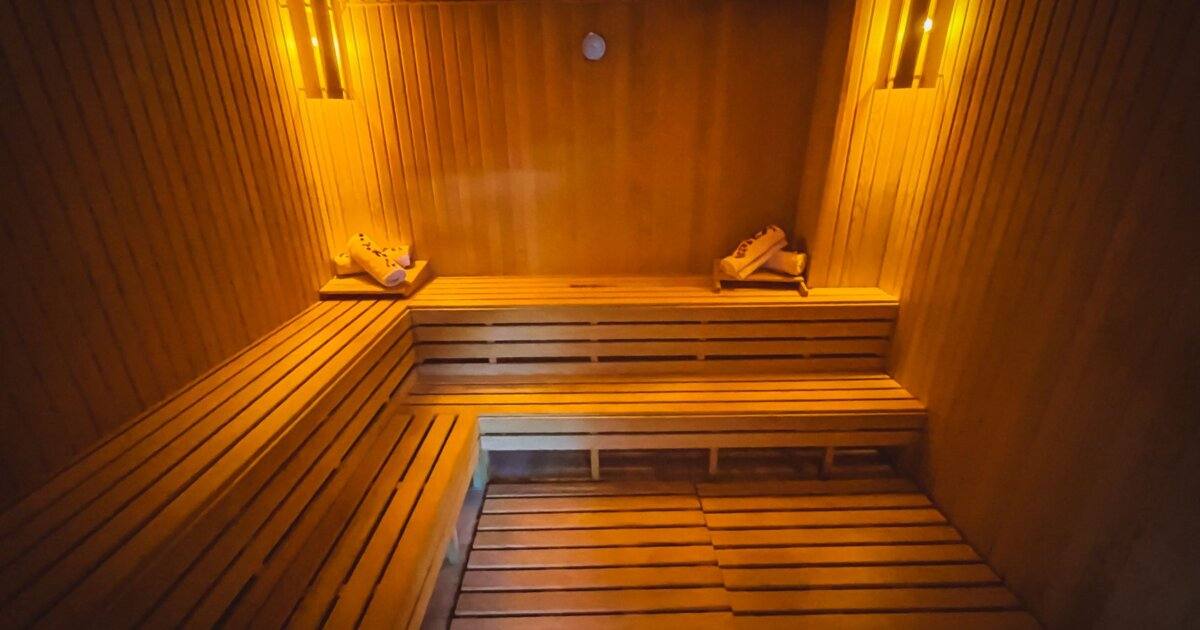
The indoor scene splits between saunas and dark room bars. Saunas are the civilian-friendly option: no dress code, no scene knowledge required, just pay at the door and figure out the floors. Dark room bars carry more subcultural weight. Warmoesstraat’s leather strip has its own history, its own codes, its own regulars who’ve been coming since before you were born. Showing up in holiday clothes and wandering into Eagle Amsterdam will feel wrong in a way you’ll understand immediately, not unwelcome exactly, just legible in the wrong language.
The Digital Layer
Apps run under everything now. Sniffies, Grindr, Scruff, BARE , they’ve changed how people arrive at venues and parks, not how the venues and parks themselves function. Locals use apps to coordinate. Tourists use them to navigate. Visitors who’d never have found De Oeverlanden independently now show up because someone on Grindr told them exactly which path. That’s a genuine change to the scene’s crowd composition. It hasn’t replaced anything.
The full breakdown of how apps have changed Amsterdam’s cruising geography, what they’ve shifted and what they can’t replicate, is in Grindr, Darkroom or Park? How Gay Men Actually Cruise Amsterdam in 2026.
Outdoor Cruising Areas: Parks, Lake & Beach
Amsterdam has more recognised outdoor cruising sites per square kilometre than any other city in the Netherlands, a fact documented in the city’s own public health policy frameworks (GGD Amsterdam, 2019). The outdoor scene is what most people mean when they talk about Amsterdam’s cruising reputation. Here’s the honest version of each location.
Vondelpark
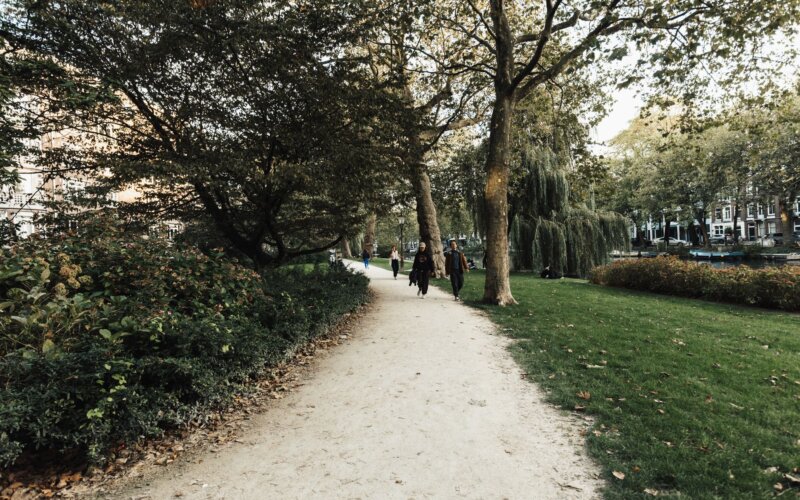
Vondelpark is the one everyone’s heard of. It’s also the one that requires the most nuance. Yes, cruising happens here. Yes, it’s been happening for decades. But Vondelpark is also Amsterdam’s busiest public park, roughly ten million visitors annually (Amsterdam & Partners, 2024), shared with joggers, families, tourists eating stroopwafels, and every dog in the Oud-Zuid district.
The action concentrates in the wooded southern section, away from the main paths and the Vondelpark cafe, after dark. During summer, the park stays animated until 11pm; the men who cruise here tend to be more cautious, more aware of the mixed public nature of the space. The anonymity is lighter than at De Oeverlanden. The stakes feel slightly higher because there are people around who aren’t there for the same thing.
I’ve always found Vondelpark’s cruising energy slightly tense, not unpleasant, but self-conscious in a way the lakeside spots aren’t. The men there know they’re sharing space, and that awareness changes how people move through it.
“Vondelpark is where men test the idea. De Oeverlanden is where they’ve already decided.”
For the full terrain breakdown, which sections work, what time, how to read the space, see Vondelpark, Nieuwe Meer & Oeverlanden: Amsterdam’s Outdoor Gay Cruising Areas.
Nieuwe Meer & De Oeverlanden: The Real Thing
De Oeverlanden is where the outdoor scene is fully itself. Located along the southwest shore of the Nieuwe Meer lake, a nature reserve formally designated by Amsterdam municipality as a tolerated cruising zone in 2008 (Gemeenteblad Amsterdam, 2008), it’s one of the most active outdoor cruising areas in Northern Europe. Summer weekends draw hundreds of men. Weekday evenings in warm months are quieter and often better for it. The setting is genuinely good: water, reed beds, wooded paths, the Amsterdam skyline visible low across the lake.
The crowd here is more local, more relaxed, more itself than anywhere else in the city’s outdoor scene. Men who’ve been using these paths for twenty years move alongside first-timers who found it on Grindr that morning. The ease comes from long establishment, everyone knows exactly why they’re here, and nobody pretends otherwise.
Getting there: Bike is the obvious option, about 25 minutes from the city centre along well-signed cycling routes. Tram 2 to Amstelveenseweg then a short cycle also works. Bus 62 from Amsterdam Centraal reaches Strandvlakte directly. On busy summer evenings, hundreds of bikes line the main path near the entrance.

For the field notes, exactly which section to use, what the 2026 safety situation looks like, and what to expect on a first visit, read De Oeverlanden & Nieuwe Meer: Field Notes from Amsterdam’s Wildest Cruising Ground.
Oosterpark & Sarphatipark: The Neighbourhood Options
Both parks operate as secondary locations, worth knowing about but not the main event. Oosterpark in Amsterdam-Oost has a section near the western ponds where cruising happens, mainly during evening hours when the park clears. It’s more neighbourhood park than dedicated scene, men are predominantly local, the pace is slow, some evenings nothing happens. Activity concentrates after 21:00 once general foot traffic clears. Mid-week evenings run more local and more consistent than weekends. Sarphatipark in De Pijp is smaller and more intermittent still.
These work well if you’re staying in East Amsterdam or the Pijp and don’t want to make the journey west. They don’t compare in scope or intensity to De Oeverlanden. Calibrate expectations accordingly. For the zone-by-zone breakdown of Oosterpark, crowd composition, and the specific paths that work, the full piece is Cruising Amsterdam’s Oosterpark: The Real Guide.
Zandvoort: The Summer Option
Thirty minutes by NS Sprinter from Amsterdam Centraal, Zandvoort beach has a gay section that runs nude and cruising-adjacent through peak summer. It’s beach culture with a specifically Dutch gay energy: unselfconscious, direct, sun-saturated. The scene concentrates in the dunes behind the southern section of the beach and is most active July and August, roughly noon onwards.
This is daylight cruising, which is its own thing. Different from any of the park or sauna scenes, more social, more visible, less anonymous. Some men find that the appeal. Others find it the wrong dynamic entirely.
The full practical guide, exactly where on the beach, train times, and how the season actually works, is in Zandvoort: Amsterdam’s Gay Beach Where Cruising Is Part of the Landscape.
A Note on Safety Across All Outdoor Locations
The vast majority of outdoor cruising in Amsterdam is uneventful. That said, De Oeverlanden in 2026 has seen a documented pattern of robberies targeting men in the more isolated wooded sections after dark. This is specific, isolated sections, after dark, alone, and staying on populated paths during active hours is a genuinely different risk profile.
The full analysis, what’s been happening, what the city owes this space, and what practical awareness actually looks like, is in Cruising Safety in Amsterdam: What the Violence at Oeverlanden Means for Us.
Gay Saunas in Amsterdam
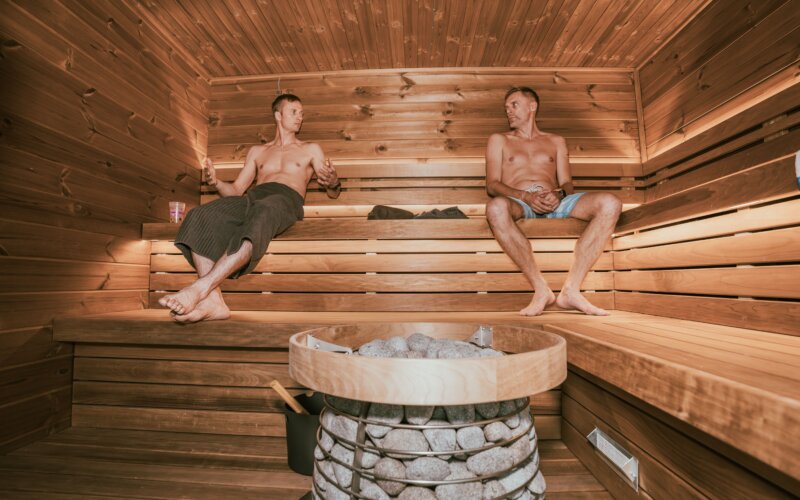
Amsterdam’s gay saunas run year-round and serve a different function from the outdoor scene. They’re warm, dry, managed, and social in a structured way, there are defined spaces, established rules, a rhythm to how the evening works. For visitors who want reliable rather than weather-dependent, a sauna is the obvious choice.
| Mode | Typical Cost | Scene Knowledge Needed | Weather Dependent | Anonymity Level |
|---|---|---|---|---|
| Outdoor park | Free | Medium | Yes | High |
| Gay sauna | €30,36 | Low | No | Medium |
| Dark room bar | €0,10 entry | Medium,High | No | High |
Sauna Nieuwezijds: The One That Matters
Sauna Nieuwezijds on Nieuwezijds Voorburgwal has been the central gay sauna in Amsterdam for decades. It runs across multiple floors: steam rooms, a dry sauna, a cabin section, a lounge area, and a dedicated dark room. Entry costs €30,36 depending on the day, with towel and locker included. The crowd is mixed in age but skews 30s and above on weekday afternoons; weekend evenings run younger, denser, and more energetically charged. Peak hours are Friday and Saturday from around 9pm.
GGD Amsterdam formally documents venues like Nieuwezijds as part of the city’s sexual health infrastructure, STI testing partnerships, harm-reduction distribution, education resources (GGD Amsterdam, 2023). That institutional relationship matters. It’s part of why Amsterdam manages gay men’s sexual health with the seriousness that most cities refuse.
The atmosphere is genuinely civilian-friendly. No fetish gear required, no scene knowledge assumed. You pay, you get a towel and a locker, you do the orientation lap of the floors. The Dutch matter-of-factness about sauna culture extends fully to gay saunas: here, it’s just where you go.
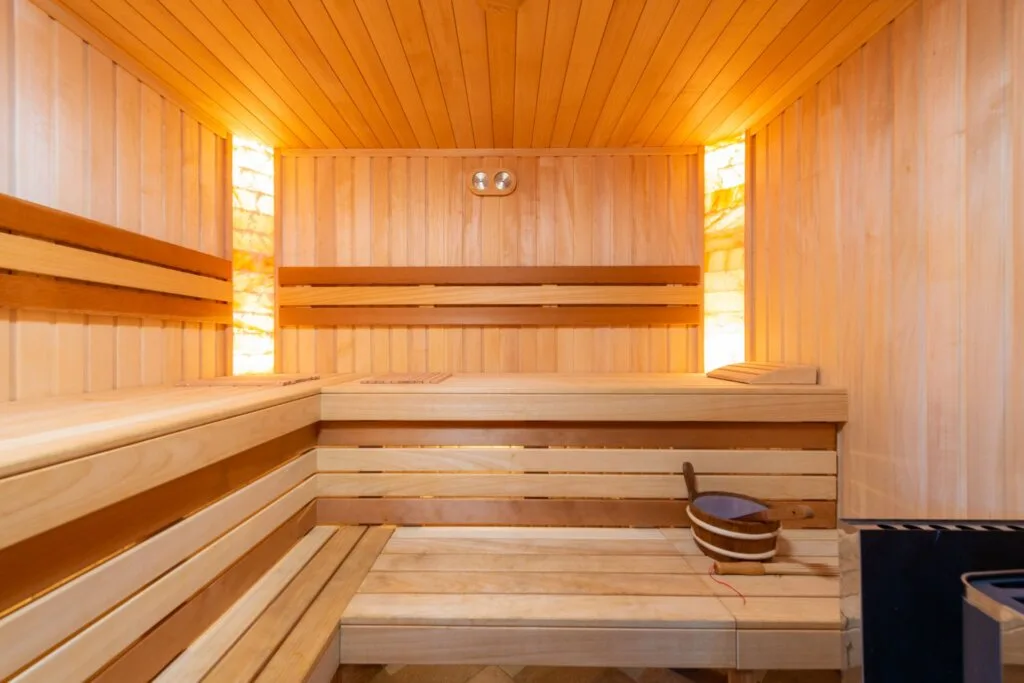
The full venue guide, what each floor has, how the crowd changes across the week, how saunas compare to the dark room bars, is in Amsterdam Gay Saunas in 2026: Nieuwezijds and the Rest, Ranked.
Warmoesstraat: The Leather & Dark Room Strip
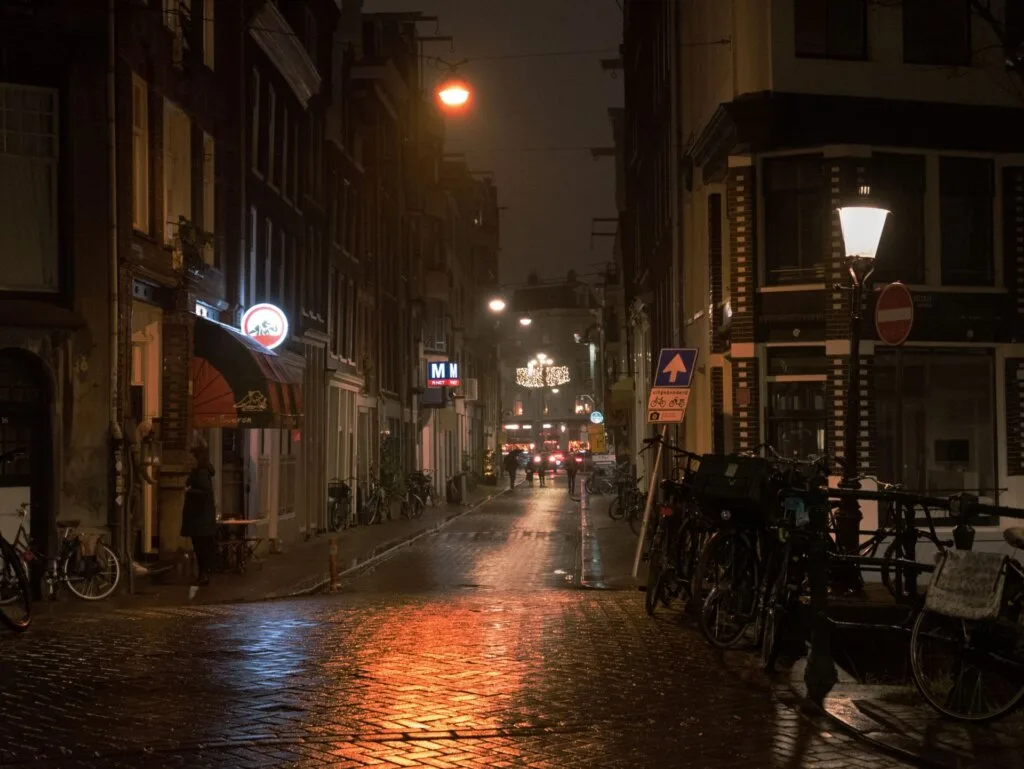
Warmoesstraat is one of the oldest continuously operating leather and cruising bar strips in Europe. Running parallel to the Damrak in the city centre, it’s been the axis of Amsterdam’s fetish and leather scene since at least the early 1970s, when the first leather bars opened in the narrow canal-side streets adjacent to De Wallen. Fifty years later, the strip still functions.
“The dark room bar is a specific technology for a specific kind of encounter, one that apps replicate poorly. The combination of anonymity, physical proximity, communal space, and clear mutual intent produces something that no profile photo negotiates.”
What kept Warmoesstraat alive through the AIDS crisis, through waves of gentrification, through the rise of Grindr? Partly the loyalty of the leather and fetish community to physical venues. Partly the specific function of the dark room: anonymous, physical, contained, operating on shared unspoken codes that don’t translate to a bio field. It’s the outdoor cruising dynamic compressed into a managed indoor space, with music and drinks and a door policy. Different men, same instinct.
Eagle Amsterdam
Eagle Amsterdam on Warmoesstraat is the anchor of the strip, the longest-running leather bar, drawing a crowd that mixes serious leathermen with curious newcomers. The dress code tightens considerably on themed nights: check their Instagram before you show up in chinos on a rubber night. The dark room is active from around 11pm on busy nights. The atmosphere is deliberate. People here know what they’re doing and expect some basic awareness from you.
Club Church Amsterdam
Church sits nearby and covers different territory, younger, more diverse in fetish expression, with a denser events calendar and a dark room that runs later into the night. A busy themed night at Church is a fundamentally different proposition from a quiet Tuesday. The variance between a sold-out event and a regular night is higher here than at any other venue on the strip. Check the calendar before you commit.
Cuckoo’s Nest
Cuckoo’s Nest has operated since 1984, making it the oldest leather bar in the Netherlands (Cuckoo’s Nest Amsterdam). Small, dark, genuinely unpretentious in a way that money can’t produce. It draws older regulars and men who’ve been coming since the place opened. Four decades through the AIDS crisis, multiple economic downturns, three waves of “the scene is dying” commentary, and Cuckoo’s Nest is still here. There’s something worth paying attention to in that.
Drakes & Dirty Dicks
Drakes runs a more mixed crowd with an active dark room space and regular bear and fetish nights. Dirty Dicks functions as the strip’s more accessible entry point, bar-first with a dark room component, less fetish-specific than Eagle or Cuckoo’s Nest, useful if you’re new to Warmoesstraat and want to understand the energy before committing to it.
The full venue-by-venue breakdown, what each dark room is actually like, dress codes by venue and night, and how to navigate Warmoesstraat without missteps, is in Warmoesstraat After Dark: Every Gay Cruising Bar on Amsterdam’s Leather Strip.
Apps, Parks, or Dark Rooms: How to Choose
The honest answer is that it depends on what kind of encounter you want, and no mode is inherently superior. Each produces different kinds of sex with different kinds of men, at a different pace, with a different social texture.
Apps give you pre-negotiated encounters with clear expectations. You know roughly what you’re walking into. The downside is the performance layer: profiles, photos, the slow friction of conversation before anything physical. Apps are efficient but they flatten spontaneity. They work brilliantly for visitors who want reliability and aren’t particularly interested in the scene as an experience in itself.
Parks give you spontaneity and the specific charge of anonymous encounter without digital mediation. You’re reading signals, reading the space, reading another person in real time. That requires comfort with ambiguity. Some evenings nothing happens. The best evenings are unrepeatable in a way that apps cannot produce. Part of what makes the outdoor scene work is that it’s not guaranteed.
Dark room bars give you a contained version of the park dynamic, anonymous, physical, direct, inside a structure with music, drinks, and a managed space with staff. They require scene awareness, some baseline comfort with leather and fetish culture as context even if you’re not into it personally, and a willingness to at minimum dress the part at the door.
“Most people who spend more than a few days in Amsterdam end up using all three in combination. The city enables this kind of fluidity, it’s part of what makes it genuinely different from other gay travel destinations.”
The full analysis, specific data on how Grindr has changed crowd composition at each outdoor location, and why the three modes produce such different kinds of encounters, is in Grindr, Darkroom or Park? How Gay Men Actually Cruise Amsterdam in 2026.
Legal Framework and Unwritten Rules
What Dutch Law Actually Says
Amsterdam’s cruising scene has real legal architecture behind it, which is unusual globally. In 2008, the city council formally designated specific outdoor areas as tolerated cruising zones (cruisegebieden) following a policy process involving GGD Amsterdam and COC Nederland (Gemeenteblad Amsterdam, 2008). This doesn’t mean you can do whatever you want anywhere. It means that within recognised zones, consensual adult sexual activity between adults is not actively policed.
Outside those zones, Article 239 of the Dutch Penal Code, schennis der eerbaarheid (indecent conduct in public), applies. The enforcement approach differs significantly from legal status. Dutch prosecutors exercise substantial discretion, and Dutch legal tradition favours context-dependent interpretation. Indoor venues, saunas, dark room bars, are private commercial premises and fall completely outside Article 239.
| Location | Designated Zone? | Article 239 Risk | Typical Police Attention |
|---|---|---|---|
| De Oeverlanden | Yes (2008) | Minimal in practice | Routine: none |
| Vondelpark | No | Low,medium | Complaint-driven |
| Warmoesstraat bars | N/A (private premises) | None | None |
| Sauna Nieuwezijds | N/A (private premises) | None | None |
| Zandvoort dunes | No | Low | Rare |
The complete legal analysis, what Article 239 actually covers, how the designation policy functions in practice, and what can genuinely get you into trouble, is in Is Gay Cruising Legal in Amsterdam? The Honest Answer.
The Unwritten Rules
The written law is only half of it. Cruising etiquette is older than any policy framework, and it works because the men who use these spaces understand it and maintain it.
No means no, always and immediately. A man who doesn’t respond to your approach or moves away from you is not playing hard to get. He’s not interested. Move on without comment. This principle is so foundational it barely needs stating, but it needs stating.
Phones and cameras stay in pockets. Outdoor cruising areas operate on a shared assumption of discretion. Photographing men without consent in these spaces is a serious violation, legally under Dutch privacy law (Autoriteit Persoonsgegevens) and socially within any of these communities. Dark room bars enforce explicit no-phones policies.
Read the energy before you approach. Every space has a rhythm specific to that evening. Spend a few minutes observing before you move toward anyone. Understanding how a space is operating on a particular night prevents the kind of clumsy misread that makes everyone uncomfortable.
The full guide to consent signals, location-specific etiquette, and how to move through parks, saunas, and dark rooms correctly, see The Unwritten Rules: Gay Cruising Etiquette in Amsterdam.
Planning Your Visit: Season, Crowd & Getting Around
Seasonal Breakdown
May through September is outdoor season. May and early June are often the best months: warm enough for the parks, long evenings, and crowds that skew local rather than tourist. July and August see the highest outdoor volumes but also the most visitor-heavy dynamics, affecting Vondelpark and Zandvoort more than De Oeverlanden. September consistently holds better than people expect, often delivering the best outdoor evenings of the year: warm, quieter, a crowd that’s almost entirely people who live here.
October through April: indoor venues run their regular schedules regardless of weather. Some of the best-attended nights at Church and Eagle happen in November and February, when the men who actually live in Amsterdam make up the crowd undiluted by summer visitors.
Zandvoort is June through August only in any practical sense.
For the month-by-month breakdown, what’s active, what’s quiet, and how to plan around Amsterdam Gay Pride (late July), Amsterdam Leather Pride (October), and the leather weekend calendar, read Cruising Amsterdam by Season: A Practical Guide to All Twelve Months.
The Locals vs Tourists Question
Amsterdam has roughly 2.9 million overnight tourist arrivals annually (Amsterdam & Partners, 2024), and a meaningful proportion of gay male visitors come explicitly interested in the scene. In peak summer, Vondelpark and the Warmoesstraat bars carry a noticeably tourist-heavy crowd. This shifts the energy: more expectant, less fluent, occasionally awkward in ways that the indoor regulars notice.
De Oeverlanden stays more local throughout the summer because it requires knowing it exists and making the journey to reach it. That friction is a filter, and the community that results is different from what you find in a park that’s 200 metres from a tourist hotel.
We cover this dynamic properly in Locals vs. Tourists: The Two Parallel Worlds of Gay Cruising in Amsterdam. The history behind it, why Amsterdam’s outdoor scene has maintained its local character despite the volume of visitors, connects directly to the political decisions in the next section.
Getting Around Amsterdam
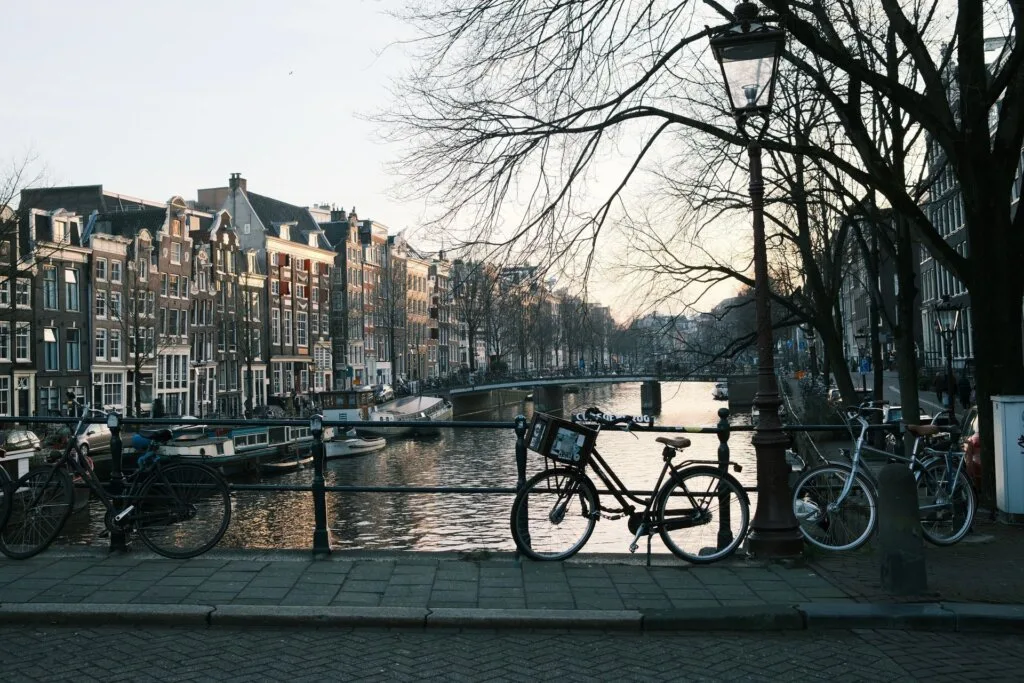
Amsterdam runs on bikes, and the cruising scene is built around that fact. Every outdoor spot is fastest reached by cycling.
- De Oeverlanden: 25 minutes by bike from the centre, or tram 2 + OV-fiets
- Vondelpark: 10 minutes by bike from Leidseplein
- Zandvoort: NS Sprinter from Amsterdam Centraal, approximately €8 return, 30,35 minutes
- Warmoesstraat: walkable from Amsterdam Centraal (12 minutes)
- Sauna Nieuwezijds: walkable from Dam Square (5 minutes)
The OV-fiets rental system works with any Dutch OV-chipkaart, available at any NS station. If you’re staying more than two days, get a card. A basic card costs €7.50 and makes the city genuinely navigable.
The Scene in Context: History & Politics
Amsterdam’s cruising culture didn’t emerge from nowhere. It has a specific political and social history that explains why this city developed the infrastructure it did when most cities chose suppression, and why that infrastructure has lasted.
The Roze Driehoek (Pink Triangle) movement was among the most politically organised gay rights structures in Europe from the late 1960s, and Amsterdam was its centre. COC Nederland, founded in Amsterdam in 1946, is the world’s oldest surviving LGBTQ+ rights organisation (COC Nederland). The combination of organised political pressure and Dutch pragmatism around harm reduction created the conditions for the city to treat outdoor gay sex as a public health question rather than a moral one.
The 2008 zone designation came out of that tradition. Rather than criminalise, ignore, or police intermittently, the city assessed where activity was already concentrated, consulted public health researchers and community organisations, and wrote a policy. It’s in the Gemeenteblad. Most cities, including many with strong progressive records on other issues, still refuse this level of honesty.
“The designated zone policy is partly why Amsterdam’s outdoor scene is safer and more stable than comparable scenes in cities without it. Official tolerance doesn’t just protect men from police, it creates conditions for the community to maintain the informal social norms that policing can never produce.”
The AIDS crisis hit the Amsterdam scene hard in the late 1980s and early 1990s. Pressure on the parks intensified. Some early venues closed. What survived did so partly because of GGD Amsterdam’s harm-reduction infrastructure, condom distribution, sex-positive education, STI testing programs that treated gay men as citizens rather than problems. The men who came back to De Oeverlanden in the mid-1990s were rebuilding something that had come close to being destroyed. That continuity, from the 1970s leather bars through the 2008 zone policy to the current scene, is what Amsterdam is.
The full political history, from the Roze Driehoek through the zone policy and up to present debates about gentrification and the scene’s future, is in The Politics of Permission: Amsterdam’s Designated Gay Cruising Zones, Explained.
For a deeper look at what 25 years of legal marriage has actually meant for Amsterdam’s gay community, read What 25 Years of Gay Marriage in the Netherlands Actually Changed.
The Amsterdam Canal Parade has its own complicated relationship with commercialisation, WorldPride Amsterdam 2026.
Frequently Asked Questions
Is outdoor gay cruising legal in Amsterdam?
Within Amsterdam’s formally designated cruising zones, De Oeverlanden being the primary one, consensual adult sexual activity is tolerated and not actively policed, under a city policy framework the council adopted in 2008 after consultation with GGD Amsterdam and COC Nederland (Gemeenteblad Amsterdam, 2008). Step outside those zones and Article 239 of the Dutch Penal Code, schennis der eerbaarheid, technically applies, though Dutch prosecutors exercise wide discretion and rarely act on isolated outdoor encounters that aren’t causing public disturbance. Indoor venues, Sauna Nieuwezijds, the Warmoesstraat dark room bars, sit entirely outside this question; they’re private commercial premises, and what happens inside them is a different legal category altogether. The honest answer, the one most guides skip: it depends where you are standing, not just what you’re doing. Know the zone boundaries before you rely on tolerance. The full legal breakdown is in Is Gay Cruising Legal in Amsterdam? The Honest Answer.
What’s the best time of year to visit for outdoor cruising?
May and September are the sweet spots, and I’ll die on this hill. Warm evenings, long daylight, and crowds that skew local rather than tourist, the exact opposite of what most visitors assume about peak summer. June runs excellent too, right before the July crowds arrive. July and August bring the highest outdoor volume of the year, but also the most visitor dilution: Vondelpark in particular gets noticeably more tentative and more tourist-heavy by mid-July. September consistently outperforms its reputation, often delivering the best evenings of the entire year, warm enough to linger, quiet enough that the crowd is almost entirely people who actually live here. October through April, the outdoor scene goes essentially dormant; that’s when the indoor venues carry the season instead. Full seasonal guide: Cruising Amsterdam by Season: A Practical Guide to All Twelve Months.
Do I need leather or fetish gear for Warmoesstraat?
Dark, simple clothing gets you through most doors on a standard night, this isn’t a costume party for casual visits. The strip changes character entirely on themed nights, though. At Eagle Amsterdam and Club Church, dress codes get enforced at the door, and the door staff aren’t being precious about it; the dress code is part of how the venue signals what kind of night it’s hosting. Cuckoo’s Nest, the oldest leather bar in the Netherlands and still running since 1984, keeps things more consistently low-key year-round, which makes it a gentler entry point if you’re unsure. Showing up in obvious tourist clothes on a designated leather or rubber night is an awkward conversation you can avoid entirely by checking the venue’s Instagram before you leave the hotel. When in doubt, dress down rather than up. Full venue guide: Warmoesstraat After Dark: Every Gay Cruising Bar on Amsterdam’s Leather Strip.
Is De Oeverlanden safe in 2026?
Generally yes, and De Oeverlanden remains the most active and most local outdoor cruising scene in Amsterdam, that hasn’t changed. What has changed is worth being honest about: 2026 saw a documented pattern of robberies targeting men specifically in the isolated wooded sections after dark, away from the main paths. That’s a narrow risk profile, not a citywide one. Staying on the populated paths during the scene’s active hours, rather than wandering into the deeper tree cover alone, is a meaningfully different and much lower risk than what’s been reported. The practical advice locals already follow: don’t bring more cash or valuables than you need, let someone know roughly where you are, and trust your read of a section before you commit to it. The full incident timeline is covered properly in Cruising Safety in Amsterdam: What the Violence at Oeverlanden Means for Us.
Do locals use these spaces, or is it mostly tourists?
Both, genuinely, but the balance shifts hard depending on season and location, and that shift changes what kind of night you’re walking into. Indoor venues, the saunas and the Warmoesstraat dark room bars, run a consistently higher proportion of Amsterdam residents year-round, since they don’t depend on weather or daylight to function. De Oeverlanden stays noticeably more local than Vondelpark even at the height of summer, mostly because reaching it, the twenty-five-minute cycle southwest of the centre, requires effort that filters out the casual tourist crowd. Vondelpark, by contrast, sits inside Amsterdam’s busiest public park, visited by roughly ten million people a year according to Amsterdam & Partners, which means its cruising energy carries more self-consciousness and a heavier visitor presence, especially in July and August. Full dynamic: Locals vs. Tourists: The Two Parallel Worlds of Gay Cruising in Amsterdam.
What’s the etiquette for first-timers?
Read the signals before you do anything else. Respect every no immediately and without comment, a man who doesn’t engage isn’t playing hard to get, he’s not interested, and that’s the end of it. Keep your phone in your pocket; outdoor cruising areas and dark room bars both run on an assumption of discretion, and photographing anyone without consent is a serious violation, legally under Dutch privacy law and socially within every one of these communities. Observe for a few minutes before approaching anyone, every space has its own rhythm on a given night, and reading that rhythm first prevents the kind of clumsy misread that makes everyone around you uncomfortable. This non-verbal system governs all three modes of Amsterdam’s scene, outdoor, sauna, and dark room alike. Full guide: The Unwritten Rules: Gay Cruising Etiquette in Amsterdam.
Citation Capsules
Outdoor Cruising Zone Policy: Amsterdam’s city council established formally designated outdoor cruising zones in 2008 through a policy process involving GGD Amsterdam and COC Nederland. Within these zones, consensual adult sexual activity between adults is tolerated and not actively policed (Gemeenteblad Amsterdam, 2008). This framework is among the most explicit of its kind in Europe.
Amsterdam Visitor Volume: Amsterdam received approximately 2.9 million overnight tourist arrivals in 2024, according to Amsterdam & Partners (Amsterdam & Partners, 2024).
GGD Amsterdam Public Health Role: GGD Amsterdam formally documents and supports indoor gay sex venues including Sauna Nieuwezijds as part of Amsterdam’s sexual health infrastructure, with STI testing partnerships and harm-reduction distribution programmes (GGD Amsterdam, 2023).
Cuckoo’s Nest Longevity: Cuckoo’s Nest Amsterdam has operated as a leather bar since 1984, making it the longest continuously operating leather venue in the Netherlands (Cuckoo’s Nest Amsterdam).
COC Nederland: Founded in Amsterdam in 1946, COC Nederland is the world’s oldest surviving LGBTQ+ rights organisation (COC Nederland). Amsterdam’s position as the political centre of Dutch gay rights organising from the 1940s onwards created the policy environment that makes the current cruising infrastructure possible.
There’s a version of this guide that ends with something reassuring: Amsterdam welcomes you, the city is open, have fun and be safe. That’s all true, and it’s also slightly beside the point.
What Amsterdam actually offers is something rarer. It offers a city that decided to be honest about what gay men do and built civic infrastructure around that honesty instead of against it. The parks at De Oeverlanden, the designated zones, the leather strip that survived five decades, these aren’t accidents or loopholes. They’re the result of political work by men who refused to disappear, who argued the case in council chambers and GGD meeting rooms and won.
Using these spaces is, among other things, a way of recognising that.
Go well.