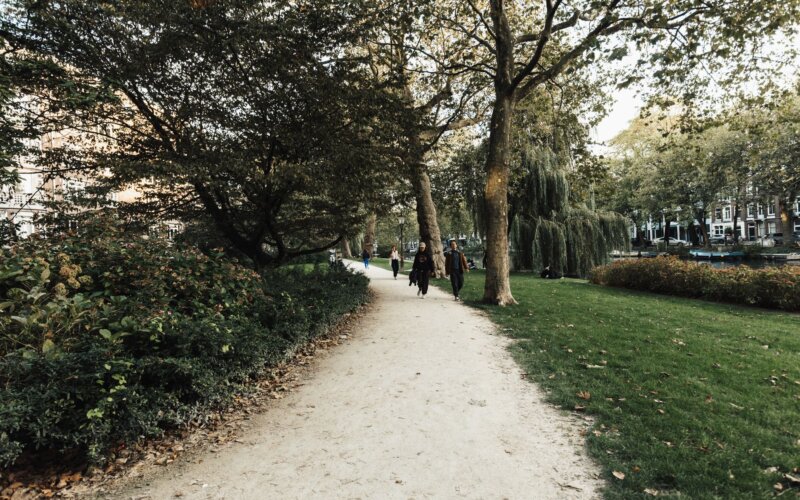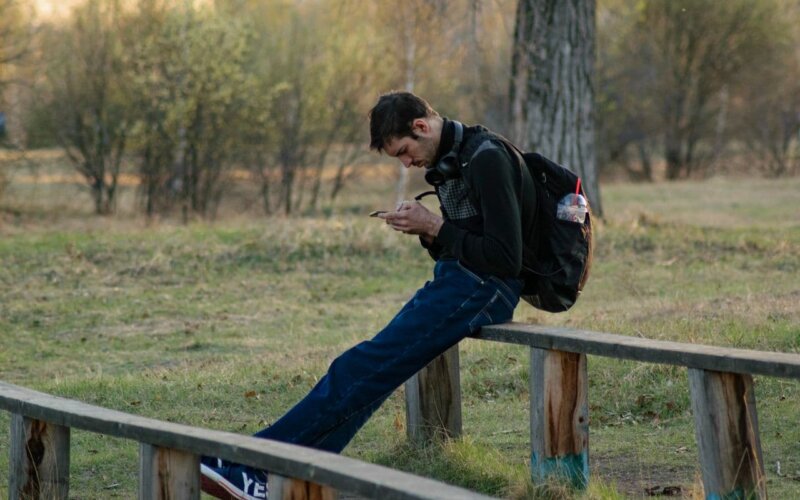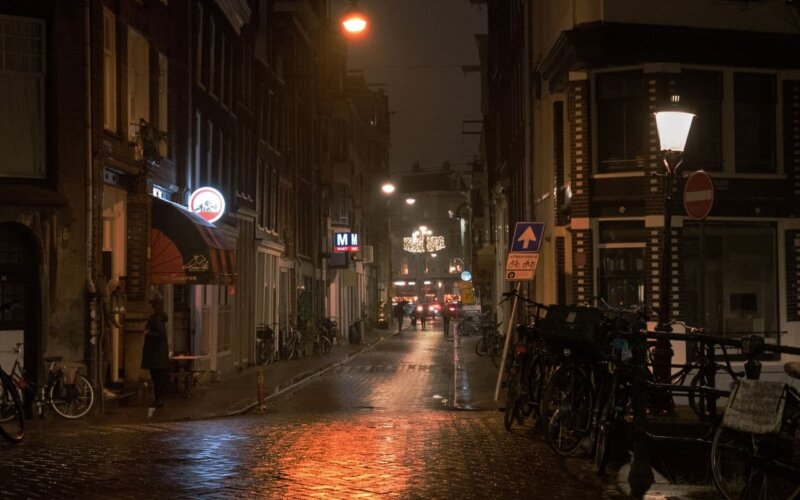
De Oeverlanden on a warm May evening is one of the better things Amsterdam offers. The water sits flat against the reed beds. Men move through the wooded paths at that particular pace, the one that says everyone understands exactly why they’re here. Amsterdam cruising has worked this way for decades. Then May 2026 put a different story in the Dutch press: at least four documented robberies and physical assaults at Oeverlanden targeting men in isolated sections after dark within a three-week window, the moment amsterdam cruising safety in this area became a news story, reported by NL Times (May 2026) and confirmed across Dutch media.
No gay outlet covered it editorially. The mainstream press treated it as a crime story and moved on. The community that actually uses De Oeverlanden got nothing: no context, no analysis, no acknowledgment that this is a designated cruising zone and the city that runs it has responsibilities here. That gap is what this piece is for. If you’re looking for amsterdam gay cruising safety tips framed as a tourist checklist, this isn’t that. This is for the men who already know the place.
Read our full Amsterdam gay cruising guide for the broader picture of what the scene looks like in 2026.
Key Takeaways
- A pattern of robberies and assaults at De Oeverlanden was reported by NL Times and Dutch media in May 2026, this is a spike, not a first
- Amsterdam formally designated De Oeverlanden as a tolerated cruising zone in 2008 (Gemeenteblad Amsterdam, 2008), that designation carries obligations
- Isolated sections after dark carry the highest risk; the area during daylight hours is a different environment
- The city’s historical response to safety issues at the park has included police presence that ended up surveilling cruisers rather than protecting them, don’t let that happen again
- Practical awareness works; panic and closing the zone do not
What’s Been Happening at De Oeverlanden
In May 2026, Dutch media including NL Times documented a rise in violent incidents at De Oeverlanden, the nature reserve on the southwest shore of Nieuwe Meer that serves as Amsterdam’s primary outdoor gay cruising ground. The pattern involved robbery and physical assault targeting men in the more isolated wooded sections of the area, predominantly after dark. Multiple incidents in a short window made this a pattern, not a series of unrelated events, a classification COC Nederland’s Amsterdam chapter applied explicitly when approaching the municipality for a response in June 2026.
De Oeverlanden has had periodic safety incidents for as long as it has been an active cruising ground. Isolated men in wooded areas are a target of opportunity, a pattern GGD Amsterdam’s sexual health outreach teams have documented across multiple Amsterdam outdoor sites over the years. What made Oeverlanden 2026 different wasn’t that violence occurred. It was the concentration and the apparent targeting: men who had moved away from the more populated shoreline paths into the deeper tree cover. Opportunistic robbery, not random crime.
You already know where to go. Now get the full edit.
Every week. No noise.
No spam. Unsubscribe anytime.
By subscribing you agree to our Privacy Policy.
The area itself is a formal nature reserve, Nieuwe Meer is managed by Amsterdam’s public space authority. It is also, since 2008, formally recognised by Amsterdam municipality as a tolerated cruising zone (cruisegebied). That dual status is at the centre of any serious discussion of cruising safety amsterdam, and it matters enormously when you’re trying to understand what obligations the city carries here.
Most of the men affected weren’t visitors. They were locals who’ve been using that path for years. The Dutch press covered this as a crime story about a park. It’s actually a story about what happens when the state designates a sexual minority’s gathering space and then provides no infrastructure to keep it safe.
Read our field notes from De Oeverlanden and Nieuwe Meer for the geography of the space in detail.
Sources: In May 2026, NL Times and Dutch media reported a concentrated pattern of robberies and physical assaults targeting men at De Oeverlanden, Amsterdam’s primary designated outdoor gay cruising area at Nieuwe Meer. The incidents focused on isolated wooded sections after dark. No major Dutch LGBTQ+ outlet published editorial analysis of the situation (NL Times, May 2026).
What a Designated Cruising Zone Actually Means
Amsterdam is one of very few cities globally with formally designated outdoor cruising zones established through official municipal policy. The 2008 Gemeenteblad Amsterdam framework, which came after a GGD Amsterdam-led process involving public health research and community consultation, explicitly recognised De Oeverlanden among the designated tolerated areas. This is genuinely progressive. It is also, in practice, tolerance without protection.
What designation means: consensual sexual activity between adults in the zone is not actively policed. What it doesn’t mean: the city monitors the area for the safety of its users, installs adequate lighting on access paths, coordinates with police to protect rather than surveil, or accepts any operational responsibility for what happens in a space it officially endorses.
I’ve been going to De Oeverlanden since my late teens. The city’s relationship to the space has always been pragmatic to the point of convenient. They get the progressive-reputation benefit of the designation policy. They get the LGBTQ+ tourism numbers. They get cited in every international comparison of gay-friendly cities. What they don’t do is show up.
Amsterdam’s gay tourism draw is substantial. The city’s own destination authority, Amsterdam & Partners, markets the city’s LGBTQ+ infrastructure as a selling point. A policy that permits the use of a space while declining to accept responsibility for user safety isn’t progressive. It’s extractive. The city benefits from De Oeverlanden’s existence without bearing any cost for it.
The comparison that matters here is to other public infrastructure. If the municipality builds a cycle path and fails to maintain it, causing injury, there are mechanisms for accountability. De Oeverlanden is a designated space, formally recognised, actively drawing users. When those users are assaulted and robbed in patterns that develop over time, what exactly does the designation mean?
| Obligation | Standard Public Park | Designated Cruising Zone (De Oeverlanden) |
|---|---|---|
| Path lighting | Yes, maintained regularly | No dedicated requirement |
| Police patrols | Standard area policing (protective) | Historically: surveillance of users, not protection |
| Safety reporting | Standard emergency services | No zone-specific reporting protocol |
| User safety obligations | Municipal liability frameworks apply | Gap in framework, tolerance ≠ protection |
| Community liaison | Standard public consultation | No formal LGBTQ+ liaison requirement |
Sources: Amsterdam’s 2008 municipal cruising zone policy, established through Gemeenteblad Amsterdam, formally designated De Oeverlanden as a tolerated cruising area following GGD Amsterdam public health research. The designation grants tolerance but does not establish formal safety obligations for the municipality toward zone users, a gap that became visible in the May 2026 incident pattern (Gemeenteblad Amsterdam, 2008; GGD Amsterdam).
Amsterdam Cruising Safety at Oeverlanden: What Actually Works
This is not a tourist checklist. These are the things that actually matter for amsterdam cruising safety at Oeverlanden, written by someone who knows the terrain. Consider this a translation of the May 2026 incidents into practical awareness.
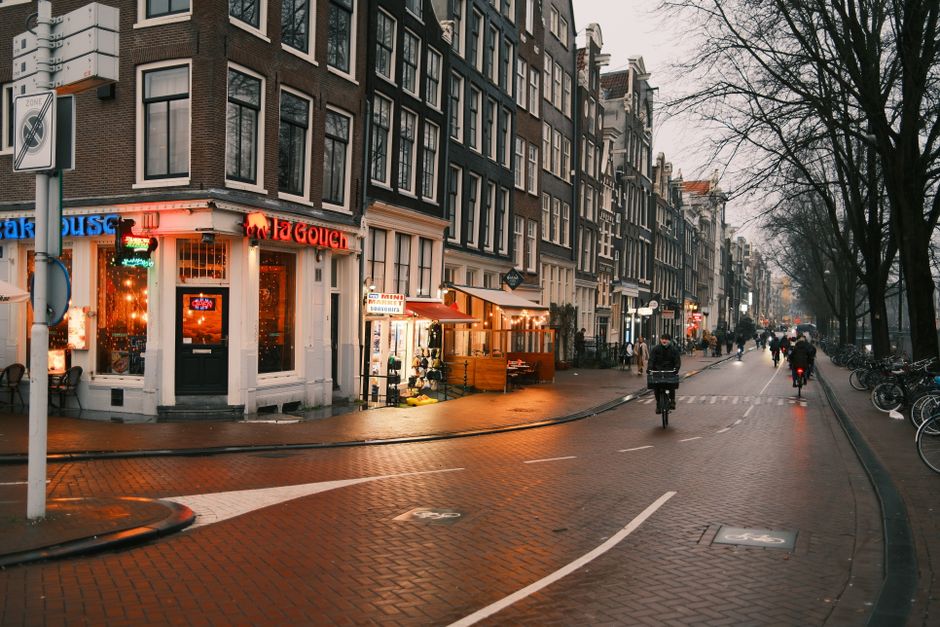
Time of day changes everything. De Oeverlanden in daylight is a nature reserve with visible paths, a populated shoreline, and ambient activity that makes targeting someone significantly harder. The same space at 1am with no ambient light on the wooded paths is a different risk environment. The incidents concentrated after dark in isolated sections. That’s not coincidence.
Know the geography before you go deep. The wooded paths inland from the shoreline have limited visibility and, in sections, limited exit routes. If you’re unfamiliar with the terrain, stay closer to the water and the more trafficked paths. You can read the space progressively as you get comfortable with it. Going deep into the trees on your first visit at night, alone, is how you find yourself in a situation with no good exits.
Go with someone you trust the first time. Not because the space is inherently dangerous. Because navigating new terrain with someone you know changes the risk profile and means someone can account for you. The vast majority of evenings at De Oeverlanden are uneventful. But that majority doesn’t help you if you’re in the minority case.
Approaches that feel like setups usually are. The May 2026 pattern involved men being drawn into isolated sections. Your instincts about whether a situation feels right are usually processing more information than you’re consciously aware of. An approach that creates urgency, moves you away from other people, or involves more than one person you didn’t come with deserves scrutiny.
Don’t carry what you don’t need. One card, enough cash for transport home. Phone in a front pocket, not a back one. This is basic and it actually matters in a space where robbery is the primary threat.
The Grindr calculation. Apps give you a name and a photo before you meet someone. Outdoor cruising is anonymous by design, that’s part of the point. But anonymity runs both ways. If you’re going to a specific isolated spot at a specific time to meet someone you found on an app, you have more information than a pure park encounter. And if something goes wrong, there’s a trail. That’s worth weighing.
For the social dynamics of how men navigate these spaces, read our piece on the unwritten rules of cruising in Amsterdam. For where the edges of the law actually sit, see the legal status of cruising in Amsterdam.
Sources: Dutch crime data consistently shows that outdoor cruising areas across the Netherlands experience periodic robbery targeting, primarily in isolated low-visibility areas after dark, with the pattern of approach often involving men being drawn away from populated sections (Politie Nederland, annual safety reports). Practical mitigation focuses on environmental awareness rather than avoidance of the spaces entirely.
What the Community Should Ask For
Here’s what we should not ask for: closure. If you’ve watched how Amsterdam’s city government handles pressure on gay spaces, you know that’s exactly the option they’d welcome. A community demanding the zone be closed saves the municipality from having to justify its existence to constituents who’ve never been comfortable with it. Don’t hand them that.
Every previous safety spike at De Oeverlanden that prompted official response produced the same result: increased police presence that focused on surveilling and disrupting cruising rather than protecting the men using the space. The 2000s saw periodic operations that ended with cruisers being moved on, cautioned, or worse, while the people actually targeting them faced no systematic response. The men who got robbed weren’t the ones the police prioritised.
So the ask on amsterdam cruising safety needs to be specific, because vague demands produce the wrong kind of police presence. Lighting on the main access paths from the road and along the primary shoreline path costs money and takes a planning decision. It changes the risk environment significantly for the section where most users gather, without criminalising the space. That’s the first demand.
The second is a police response framework that’s actually designed to protect zone users. Amsterdam’s LGBTQ+ liaison structure within the politie exists partly to handle this kind of situation. COC Nederland has maintained relationships with municipal government since 1946, the world’s oldest surviving LGBTQ+ rights organisation. Using those channels to demand protection rather than surveillance is a legitimate ask and one that has political traction if it’s made clearly.
What neither of those looks like: a moral panic driven by a handful of mainstream news stories. Dutch media framed the May 2026 incidents as a crime story in a public park, full stop. The context, designated zone, decades of use, community infrastructure, municipal responsibility, appeared nowhere. When mainstream media sets the frame, the community’s job is to contest it with specifics, not amplify it with fear.
| Period | Incident Pattern | Municipal / Police Response | Outcome for Community |
|---|---|---|---|
| Early 2000s | Periodic robbery and targeting in wooded sections | Police patrols targeting cruising activity | Cruisers dispersed; perpetrators not systematically addressed |
| 2008 | Policy reform driven by GGD Amsterdam research | Formal designation of tolerated cruising zones via Gemeenteblad | Tolerance without protection formalised in policy |
| Mid-2010s | Sporadic incidents, no sustained pattern | No specific policy response | Status quo maintained |
| May 2026 | Concentrated pattern of robbery and assault after dark | No official response as of publication | Gap in municipal accountability made visible |
Amsterdam is a city that made a decision about gay men having sex outdoors and chose pragmatism. That decision lives in a policy document, but it also lives in the people who argued for it in the 1990s and 2000s. COC, GGD, community organisations, they built something. The current situation is a test of whether that architecture still functions or whether it was always more symbolic than structural.
Read the full history of how Amsterdam built its cruising scene to understand what’s now at stake.
Sources: COC Nederland, founded in Amsterdam in 1946 and the world’s oldest surviving LGBTQ+ rights organisation, has maintained ongoing institutional relationships with Amsterdam municipality and the politie. These channels represent the legitimate mechanism for community demands around designated cruising zone safety, specifically, lighting improvements and protective rather than surveillance-oriented police response.
Frequently Asked Questions
Is De Oeverlanden safe to use right now?
The Oeverlanden 2026 incidents were real and worth taking seriously. But “safe” is doing a lot of work in this question. De Oeverlanden has operated as Amsterdam’s largest outdoor cruising ground for decades, and the risk profile varies enormously depending on when you go, where you are within the site, and how you move through it. Daylight hours and the populated shoreline paths carry low risk, men sunbathing, cycling through, the everyday Amsterdam presence that makes predatory behaviour difficult. The higher-risk situation is isolated wooded sections after dark, alone, with no line of sight to other activity. COC Nederland’s community safety documentation notes that targeting patterns at outdoor cruising grounds are almost always location-specific and time-specific, not a general hazard of the space as a whole. Practical awareness, knowing the terrain, staying near activity, trusting your instincts, changes the odds significantly. The detailed spatial guidance above covers what specifically to watch for.
Should I avoid De Oeverlanden until the situation is resolved?
That’s a personal decision, and I’m not going to make it for you. But I’ll tell you what the options actually look like. The practical guidance here applies whether you go tomorrow or in three months. What “resolved” means is also unclear, and that’s not accidental. The city hasn’t committed to lighting improvements at the designated cruising zones. There’s no stated police protection plan specifically for men using city-sanctioned public sex spaces. Mainstream press coverage of the May 2026 Oeverlanden incidents moved on within two weeks, a pattern GGD Amsterdam’s community health outreach teams have noted repeatedly: incident spikes generate media cycles without producing structural institutional responses. COC Nederland’s Amsterdam chapter submitted a written request for a formal municipal safety meeting following the May 2026 incidents. As of this writing, no meeting date has been set and no public acknowledgement issued by the municipality. Waiting for resolution, under these conditions, may mean waiting indefinitely. What doesn’t wait is the community that still uses this space every week.
Did the city respond to the May 2026 incidents?
As of publication, no official municipal response specifically addressing the safety of De Oeverlanden as a designated cruising zone has been issued. That’s not a minor administrative gap, it’s a structural choice. The Amsterdam municipality formally recognises De Oeverlanden as one of a small number of designated outdoor sex areas under its tolerance policy, a status documented in Gemeenteblad Amsterdam. That formal recognition carries an obligation: the city chose to regulate rather than prohibit, and regulation without protection is policy left half-finished. COC Nederland’s Amsterdam chapter submitted a written safety request to the municipality in June 2026 following the May incidents. As of this writing, no public acknowledgement has been issued and no formal meeting has been scheduled by the municipality. The silence from the Stopera is its own kind of statement about which communities receive institutional attention when their safety is threatened in a space the city officially sanctions.
What’s the difference between how police handled this before and what’s needed now?
Previous police responses to De Oeverlanden incidents focused on dispersal, moving men on, documenting activity, treating the sexual nature of the space as the problem rather than the crime targeting it. That operational logic hasn’t changed much. What’s needed now is a fundamentally different brief. The May 2026 incidents followed a specific, documentable pattern: two or more men approaching individuals in the isolated northern wooded sections between 21:00 and 23:00, with robbery as the primary motive and physical assault when targets resisted. NL Times reported at least four separate incidents matching this description within a three-week window in May 2026. That’s a pattern requiring targeted presence in specific locations during specific hours, not the generalised dispersal response historically applied to cruising ground incidents. Explicit community pressure on the municipality and Politie Eenheid Amsterdam remains the only lever that has consistently shifted operational priorities around queer public spaces.
Where can I find the broader legal context for cruising in Amsterdam?
Amsterdam’s designated cruising zones occupy a specific legal position that most coverage gets wrong in one direction or another. De Oeverlanden, Vondelpark, and a handful of other sites operate under a municipal tolerance policy, gedoogbeleid, that permits sexual activity in designated sections, while Article 239 of the Dutch criminal code would otherwise prohibit public sexual acts in those same locations. The boundary matters: what’s tolerated in a designated zone is not simply “anything goes.” The tolerance policy has conditions, and those conditions affect both how users can interact with the space and what legal protection they can claim if something goes wrong. It also determines how police are legally expected to respond, a distinction consistently ignored in practice, as responses default to dispersal rather than protection of the people actually at risk. The full breakdown, what Article 239 covers, where the tolerance zones sit legally, what rights you actually have as a cruiser, is in our piece on the legal status of cruising in Amsterdam.
The city built a framework and called it progressive. The men who use De Oeverlanden built the actual thing, over decades, one warm evening at a time. Right now, one of those men is doing the arithmetic: how much awareness is enough, which path is lit, whether tonight is the night to stay home. The city that put its name on this space in a policy document from 2008 should be doing that arithmetic too. So far, there’s no evidence it is.
That’s not a reason to abandon the space. It’s a reason to be louder about who owns the problem.