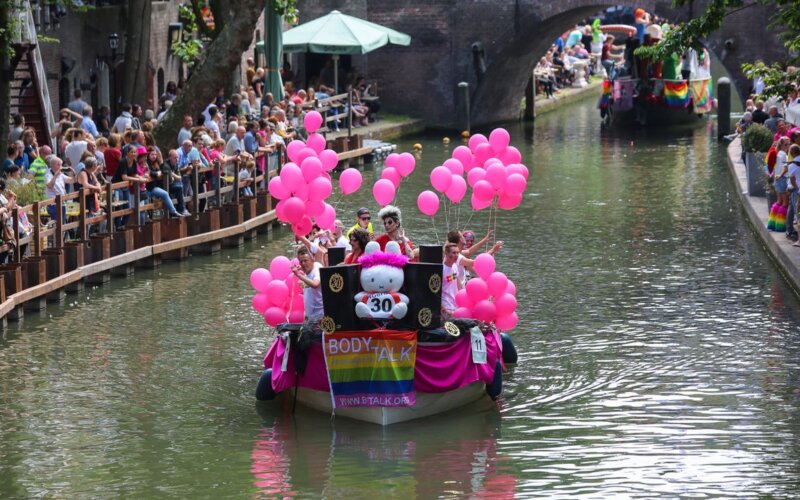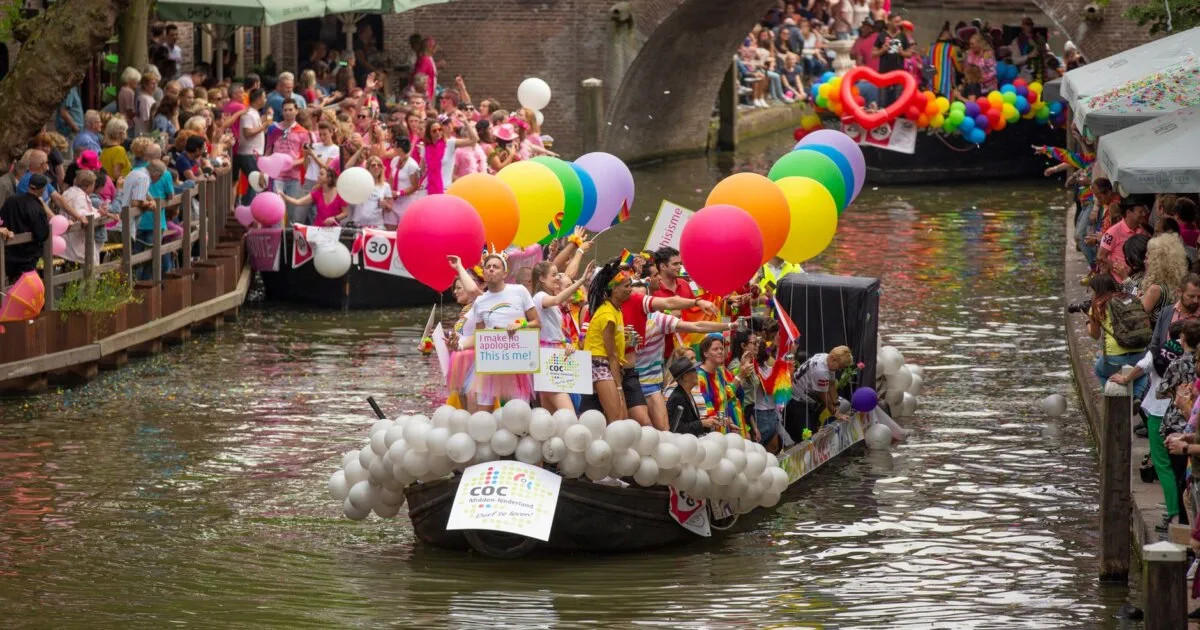
The story I was told about the Canal Parade was always the same. Eighty boats, the Prinsengracht, 400,000 people on the bridges. You know the image. It’s been in every travel spread since 2001, and before that it was in every gay magazine since 1996. What nobody told me,not the guides, not the coverage,is that for a long stretch of the last decade, a lot of those boats were selling something.
Not pride. Product.
In 2022, 44 percent of the Canal Parade’s boats were corporate-sponsored. Almost a third were large multinationals. Shell had a float. Banks had floats. Airlines had floats. The Canal Parade,which began in 1996 as a Gay Business Association initiative to drive tourism and put Amsterdam’s queer nightlife on the map,had become the most effective Pride marketing vehicle in Europe. The companies figured it out. You put a rainbow on a boat, you sail past half a million people and a wall of television cameras, and it costs a fraction of what a comparable advertising campaign would run you. What the queer community got in return was the visual.
There were protests, of course. There always are. Academic researchers had documented the pinkwashing dynamics of the Canal Parade with a specificity that should have embarrassed the organizers. It didn’t embarrass them enough. Or it did, slowly. Because something started to shift.
By 2025,the 30th Canal Parade,corporate boats had fallen to 32 percent. Multinationals: 15 percent, down from 30. At last year’s parade, activists were arrested for disrupting the Booking.com float, protesting the company’s business ties to Israeli settlements in occupied Palestinian territory. The parade now belongs, majority-to-minority, to nonprofits, grassroots organizations, individual queer groups, and community activists. This is not a small thing.
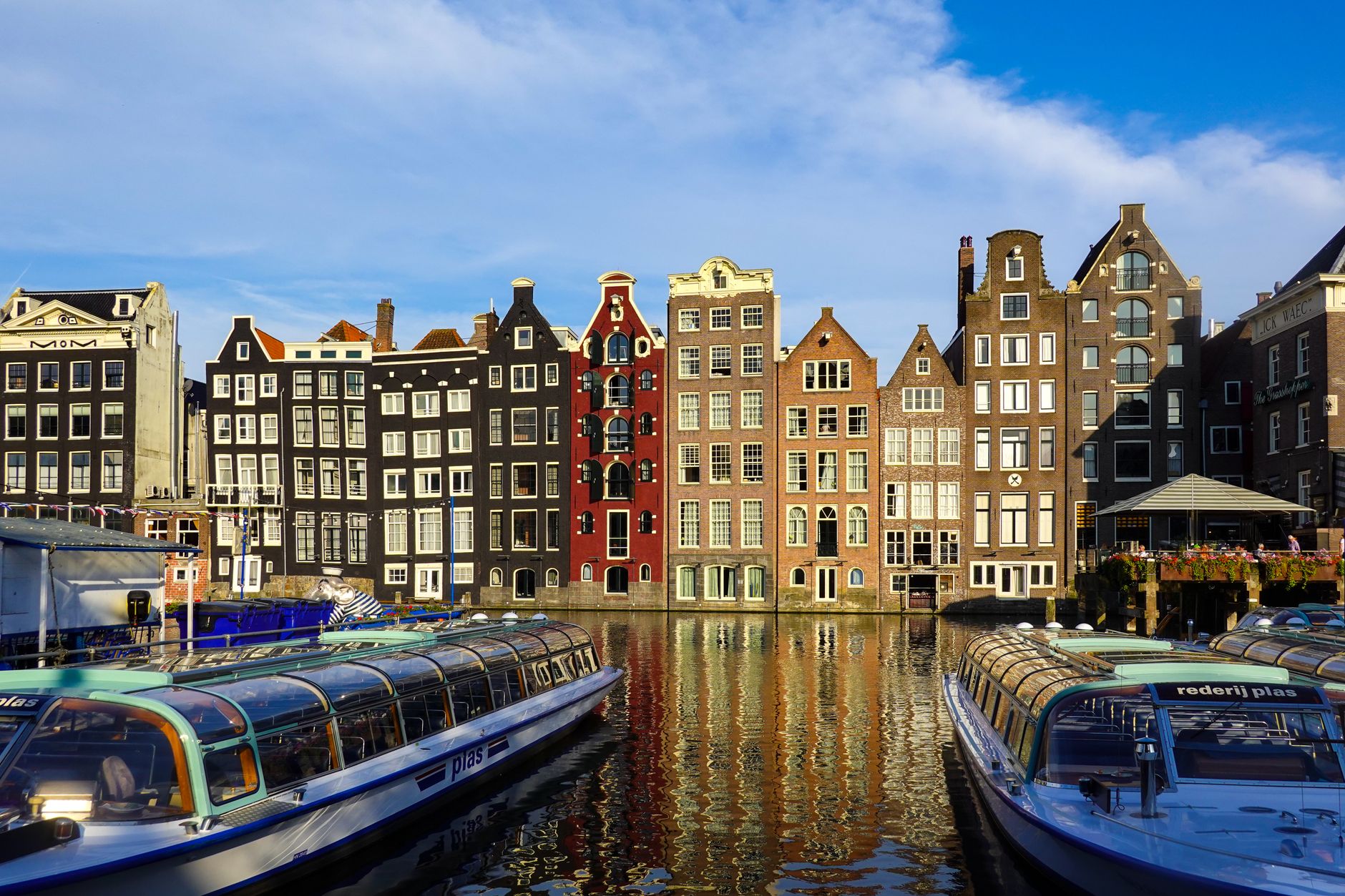
What makes the Canal Parade worth standing on a bridge in the rain is not the spectacle. It’s the specificity. The boat for trans people who were made to wait too long. The boat for queer refugees who never expected to be legal anywhere. The boat for the old men who were there in 1987 when the Homomonument was unveiled on the Westermarkt,three pink triangles in granite, the first monument anywhere in the world to commemorate homosexuals persecuted during the war,and understood what it meant to have a monument at all. Those are the boats that stop you mid-breath.
The queer cultural conversation, before it goes mainstream.
Every week. No noise.
No spam. Unsubscribe anytime.
By subscribing you agree to our Privacy Policy.
The corporate boats don’t do that. They do something else: they generate revenue that subsidizes the community boats, which have been paying the same below-cost rate since 2014. The Canal Parade costs around €730,000 to run. Pride Amsterdam has to find that money somewhere. That tension is real, and anyone who pretends the math is simple is either lying or not paying for the boats.
But there is a difference between necessary and dominant. And somewhere between 2022 and 2025, the balance corrected itself. Not through one decision. Through accumulated pressure,protests, boycotts, years of community debate that the mainstream press reduced to a thirty-second scandal and moved on from. The community didn’t move on.
The Canal Parade began 30 years ago. The Gay Business Association organized the first boats, and the occasion was partly promotional,a visibility bid for Amsterdam’s gay nightlife scene. There is something almost poetic about the fact that the event has spent three decades cycling through that original tension between community and commerce, between queer space and brand opportunity, and has arrived at its 30th anniversary having come back to something closer to the beginning.
This is the Canal Parade that WorldPride Amsterdam 2026 inherits. On August 1, those boats will sail the Prinsengracht for the largest Pride audience in Dutch history. The Amsterdam queer community has had a complicated year, as queer communities everywhere have complicated years. And yet here we are.
The world is coming to watch. What they see will matter. I’d rather they see us,not what they were sold.
Frequently Asked Questions
Is Amsterdam Pride too corporate?
It’s less corporate than it used to be, and the trend line is real. In 2022, 44 percent of the Canal Parade’s boats were corporate-sponsored, with large multinationals alone accounting for 30 percent of the total. By 2025, the parade’s 30th edition, corporate participation had fallen to 32 percent, and multinationals had dropped to just 15 percent. That didn’t happen through one decision, it happened through accumulated pressure: protests, boycotts, and years of community debate the mainstream press reduced to brief scandals and moved past. Last year, activists were arrested disrupting the Booking.com float over the company’s business ties to Israeli settlements in occupied Palestinian territory, which tells you the pressure hasn’t let up. The parade now belongs, majority to minority, to nonprofits, grassroots organizations, and community groups rather than corporate sponsors. It’s not pinkwashing-free, sponsorship still funds the event, but the balance has genuinely shifted toward the people it’s supposed to represent.
When is the Amsterdam Canal Parade at WorldPride 2026?
The Amsterdam Canal Parade at WorldPride 2026 takes place on Saturday, August 1, 2026, sailing the Prinsengracht in front of what’s expected to be the largest Pride audience in Dutch history. It marks the parade’s 30th anniversary, it began in 1996, organized by the Gay Business Association as a visibility bid for Amsterdam’s gay nightlife scene, back when the idea of boats full of queer people sailing through the city centre was itself the statement. Three decades later, the parade has cycled through its own internal tension between community and commerce, between queer space and brand opportunity, and arrived at this anniversary having pulled back toward something closer to where it started: corporate sponsorship down, community and grassroots presence up. WorldPride 2026 inherits a parade that’s spent thirty years figuring out what it actually wants to be.
Why did corporate boats leave the Amsterdam Canal Parade?
Sustained activist pressure, pinkwashing protests, and growing community scrutiny, not one boycott or one bad headline, but years of accumulated friction the mainstream press kept reducing to thirty-second scandals. Academic researchers had documented the pinkwashing dynamics of the parade with a specificity that should have embarrassed the organizers; it took a while, but it eventually did. Between 2022 and 2025, corporate boat participation fell from 44 percent to 32 percent, and large multinationals dropped from 30 percent to just 15 percent of total boats. The clearest recent flashpoint: activists were arrested last year disrupting the Booking.com float over the company’s ties to Israeli settlements in occupied Palestinian territory, a protest that got more attention than most of the pinkwashing critiques that came before it. The pattern across all of it is the same, companies that treated the parade as cheap advertising have been getting steadily less welcome.
Who organizes the Amsterdam Canal Parade?
Pride Amsterdam organizes the Canal Parade, with participation from LGBTQ+ organizations, grassroots community groups, NGOs, and corporate sponsors all sailing the same stretch of the Prinsengracht. Running it costs roughly €730,000, and that bill has to get paid somehow, which is the uncomfortable math nobody likes to sit with when they’re criticizing corporate involvement. Pride Amsterdam has subsidized community boats at below-cost rates since 2014, meaning the corporate sponsorship fees have effectively been propping up the nonprofit and grassroots participation for over a decade. That’s a real tension, not a hypothetical one: there’s a difference between corporate money being necessary to the parade’s survival and corporate boats being allowed to dominate its visual identity. The 2022-to-2025 shift suggests the organizers found a better balance between the two, money still flows in, but the boats on the water increasingly represent the community rather than the brands paying to be near it.