I’ve lived in Amsterdam my whole life. I was here on April 1, 2001, though I wasn’t old enough to understand what it meant. Four couples walked into Amsterdam City Hall and did what no same-sex couple had ever been legally allowed to do anywhere in the world. They got married. The cameras were everywhere. The Prime Minister was there. The world was watching.
Twenty-five years later, the Netherlands has a gay Prime Minister. Rob Jetten,openly gay, in office, planning to marry his partner. More than 36,000 same-sex couples have wed in the Netherlands since that first April morning. Thirty-seven countries have followed with their own versions of marriage equality. WorldPride is coming to Amsterdam this July, the largest LGBTQ+ event on the planet, hosted for the first time in the country that started all of this. By any measure that looks good on paper, we won.
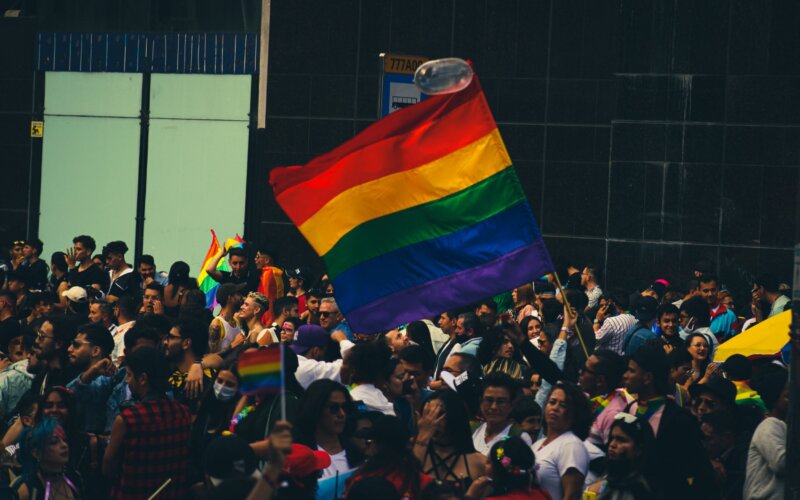
I also know that queer people in Amsterdam still get harassed on the street for holding hands. That LGBTQ+ youth in the Netherlands still face bullying in schools at rates that don’t reflect our legislation. That a young man I know didn’t tell his family for three years because he was afraid of what they’d say, and he grew up in Amsterdam, in 2024.
Winning is not a destination. It’s a direction.
What actually changed in 2001
What changed in 2001 was not homophobia. What changed was the law,which matters enormously, and which is not the same thing. The law created protection. It created visibility. It created the legal scaffolding for a life that didn’t require hiding. That is not nothing. In fact, it’s almost everything, when you put it next to what exists for queer people in the majority of the world’s countries.
Right now, at least nine US states have active legislation seeking to undo the 2015 Supreme Court marriage equality decision. Senegal just toughened its criminalization of homosexuality. Large parts of Asia and Africa remain, for queer people, genuinely dangerous. The world did not follow the Netherlands neatly. It moved sideways and backwards and occasionally forward and nowhere near as fast as the moment in that Amsterdam City Hall suggested it would.
The queer cultural conversation, before it goes mainstream.
Every week. No noise.
No spam. Unsubscribe anytime.
By subscribing you agree to our Privacy Policy.
This is why WorldPride 2026 has the theme “Unity.” Not because there is unity. Because there isn’t, and naming what you’re reaching for is not the same as pretending you already have it.
Worldpride Amsterdam 2026: The Walk of Pride and what it’s made of
Something new is being built into Amsterdam’s streets for WorldPride. The Walk of Pride: fifty-two tiles bearing the names of queer trailblazers from around the world, forming a permanent route from Dam Square to the Homomonument on the Westermarkt. The Homomonument itself,three pink granite triangles unveiled in 1987,was the first monument anywhere in the world to commemorate homosexuals persecuted during the Second World War. The tips of those triangles point toward the National Monument, toward the Anne Frank House, and toward the headquarters of COC Netherlands.
COC turns 80 this year. Eighty years since 1946, when it began as a small readers’ circle for a magazine, in a country still recovering from the Nazi occupation. The oldest existing LGBTQ+ advocacy organization in the world, started in Amsterdam. That lineage,from a reading group in 1946, through the decades of organizing that shaped Amsterdam’s queer culture, to the country that redefined marriage in 2001, to the host of the world’s largest Pride event in 2026,is not a straight line. It’s the kind of story that takes eighty years to tell properly.
The Netherlands was first. It was not fast. Between COC’s founding in 1946 and the first gay marriage in 2001, there were fifty-five years of political work, activism, legal challenges, and public debate. Winning takes longer than it looks from the outside.
What WorldPride actually means in 2026
WorldPride has previously been held in Rome, Jerusalem, London, Toronto, Madrid, New York, Copenhagen, Sydney, and most recently Washington,in 2025, under a US administration that had spent months dismantling federal LGBTQ+ protections. The event moved from Trump’s Washington to the city that invented gay marriage. That is not a coincidence. It’s a statement.
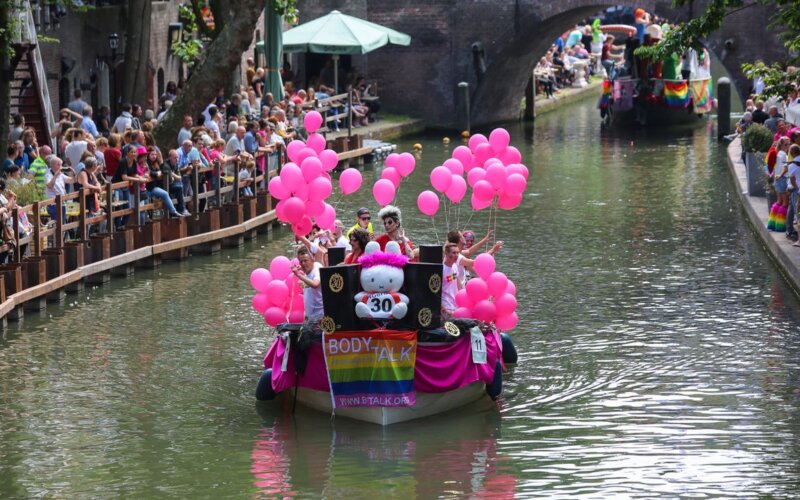
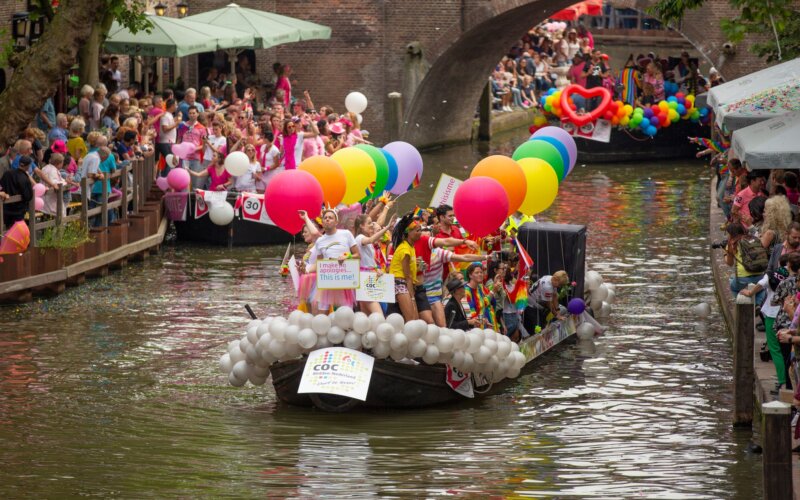
Amsterdam is throwing the largest party in its Pride history. The city’s queer life runs deeper than its party calendar suggests,but the party matters too, as an act of visibility and a refusal to be quiet about who we are. Over 500 events across 15 days. The Canal Parade on August 1. The WorldPride March on August 8. The exhibition “Queer Amsterdam, the Pink City” at De Nieuwe Kerk opening July 9 and running nearly a year.
I’m not going to tell you Amsterdam has solved the thing. Nobody has solved the thing. What Amsterdam did was decide, a long time ago, that the thing was worth solving,and kept deciding that, through every conservative government and every economic crisis and every year other countries didn’t follow as quickly as we hoped.
The Walk of Pride gets unveiled this July, right as the world arrives. Fifty-two names. A route you can walk. A line from the center of the city to the monument.
That is what twenty-five years actually looks like, if you look at it carefully enough.
Frequently Asked Questions
Why did the Netherlands legalize gay marriage first?
The Netherlands was the first country in the world to legalize same-sex marriage, on April 1, 2001, when four couples married at Amsterdam City Hall with the Prime Minister and international cameras in attendance. That moment followed decades of activism led by COC Netherlands, the oldest LGBTQ+ advocacy organization in the world, founded in Amsterdam in 1946 as a small readers’ circle for a magazine, in a country still recovering from Nazi occupation. Between COC’s founding and that first wedding lay fifty-five years of political organizing, legal challenges, and public debate; winning took far longer than the photographs from 2001 suggest. A progressive political environment and a legal tradition open to incremental reform made the Netherlands the place where this happened first, not because Dutch society had solved homophobia, but because it had built the legal scaffolding for a life that didn’t require hiding.
What changed after the Netherlands legalized same-sex marriage in 2001?
Since 2001, more than 36,000 same-sex couples have married in the Netherlands, and 37 other countries have followed with their own marriage equality legislation, a number that keeps the Dutch milestone looking less like an isolated event and more like the first domino. But the law was never the whole story. Dutch LGBTQ+ youth still face bullying in schools at rates that don’t reflect the country’s legislation, and queer people in Amsterdam still get harassed on the street for holding hands, including in recent years. Legal change and cultural change simply don’t move at the same speed; one creates protection and visibility, the other takes generations to catch up. Right now, at least nine US states have active legislation seeking to undo the 2015 marriage equality ruling, a reminder that the Dutch milestone didn’t make the fight elsewhere permanent or finished.
Why is WorldPride Amsterdam 2026 significant?
WorldPride Amsterdam 2026 runs July 25 to August 8 and marks the first time the Netherlands has hosted the event, under the theme “Unity”, chosen not because unity already exists, but because naming what you’re reaching for matters even when you don’t have it yet. The timing stacks three anniversaries at once: 25 years since the Netherlands’ first same-sex marriages, 30 years of Pride Amsterdam, and 80 years of COC Netherlands, the world’s oldest surviving LGBTQ+ rights organization. Over 500 events are scheduled across the fifteen days, including the Canal Parade, a Human Rights Concert, and the unveiling of the Walk of Pride. It’s also notable for what preceded it: WorldPride 2025 was hosted in Washington, D.C., under an administration actively dismantling federal LGBTQ+ protections. The event moving to the city that invented gay marriage the following year is not a coincidence.
What is the Walk of Pride in Amsterdam?
The Walk of Pride is a permanent monument unveiled for WorldPride 2026: fifty-two tiles bearing the names of queer trailblazers from around the world, forming a route from Dam Square to the Homomonument on the Westermarkt. The Homomonument itself, three pink granite triangles unveiled in 1987, was the first monument anywhere in the world to commemorate homosexuals persecuted during the Second World War, and its tips point toward the National Monument, the Anne Frank House, and COC Netherlands’ headquarters, tying four different histories of persecution and resistance into one sightline. The Walk of Pride extends that lineage forward, giving Amsterdam a physical, permanent route you can walk rather than just a plaque or a one-week installation. It’s unveiled in July 2026, timed to land as WorldPride visitors arrive, turning the city’s queer history into something tourists encounter on foot, not just read about.