I went to Madrid expecting Chueca to be the whole story and came back having spent more time on a hillside in Casa de Campo than in any bar on Calle Infantas. That wasn’t the plan. It’s just what happened once I understood what the city actually offers, which is considerably more than the rainbow-crossing version of Chueca that most guides stop at.
I’m Marcus Veld. I write the cruising and nightlife beat for Loaded Edit, and I’m Amsterdam-born, which means I arrived in Madrid with a fairly specific yardstick: fifty years of Warmoesstraat, a designated outdoor zone with its own municipal paperwork, a scene that’s been formalised within an inch of its life. Madrid formalises almost nothing. That turned out to be the most interesting thing about it.
Key Takeaways
- Madrid’s cruising scene splits into three zones that barely overlap: Chueca’s bars, Chueca’s dedicated cruise clubs, and Casa de Campo’s outdoor scene around Cerro Garabitas
- Casa de Campo is reached via Metro line 10 to Lago, then roughly fifteen minutes on foot toward the cable car pylon; weekends and summer nights run busiest
- Shower Bar and Boyberry run dark rooms inside otherwise normal-looking Chueca venues; Attack and The Ring are private cruise clubs with stricter door policies
- Spain has no working national criminal law for adult public sex; enforcement runs through municipal civic ordinances that vary by administration
- Unlike Amsterdam’s written 2008 zone policy, Madrid’s tolerance is entirely unwritten custom, which makes it feel looser and less guaranteed at the same time
Chueca’s Bars: The Social Layer
Calle Infantas is where Chueca’s bear and leather-adjacent crowd actually lives, and Hot, a few doors down from the metro exit, is where most of them start the night. It’s small, unpretentious, and reliably full by eleven, which tells you something about the neighbourhood’s actual rhythm versus its tourist-brochure version. Zarpa, further along the same street, runs a more local, slightly older crowd, beer rather than cocktails, the kind of bar that doesn’t need to perform for anyone walking past the window.
Neither bar has a dark room. Neither pretends to. They’re where you read the room before deciding whether your night is a Chueca night or a Casa de Campo night, and that distinction matters more in Madrid than it does almost anywhere else I’ve covered for this site.
Marcus’s take: Chueca’s bar scene gets a disproportionate share of the English-language coverage because it’s the easiest part to photograph and the easiest part to recommend without controversy. It’s also, frankly, the least interesting layer of what’s actually here.
You already know where to go. Now get the full edit.
Every week. No noise.
No spam. Unsubscribe anytime.
By subscribing you agree to our Privacy Policy.
The Cruise Clubs: Where the Neighbourhood Gets Wild
Shower Bar, tucked into Chueca’s denser grid, runs a wet room and a maze of private cabins behind a deliberately unremarkable bar frontage. Boyberry combines a sex shop, a small bar, and a cabin area behind a token cover, which makes it the most accessible entry point if you’ve never done a cruise venue before and want low stakes. Both run later than the social bars and both assume you already know what you came for.
Apps have changed how visitors find venues like these in every city I’ve covered, Madrid included, and Shower Bar in particular now sees a steady stream of men who found it on a map rather than from a friend. The venue hasn’t changed to accommodate that. It still runs exactly the way it ran before anyone could look it up in advance, which I’d call a point in its favour.
Attack and The Ring sit a register higher in intensity: private cruise clubs with slings, cages, and a wet area, closer in spirit to a proper fetish venue than to a bar with a back room. The Ring, technically over the border in Lavapies rather than Chueca proper, draws a crowd willing to make the short trip specifically because the venue doesn’t water itself down for passing tourist traffic.
Marcus’s take: Attack is the venue I’d send a leather-curious first-timer to before The Ring. It’s serious without being unwelcoming to someone still working out what they’re into, which is a harder balance than most fetish clubs manage.

Casa de Campo: Where the Real Scene Lives
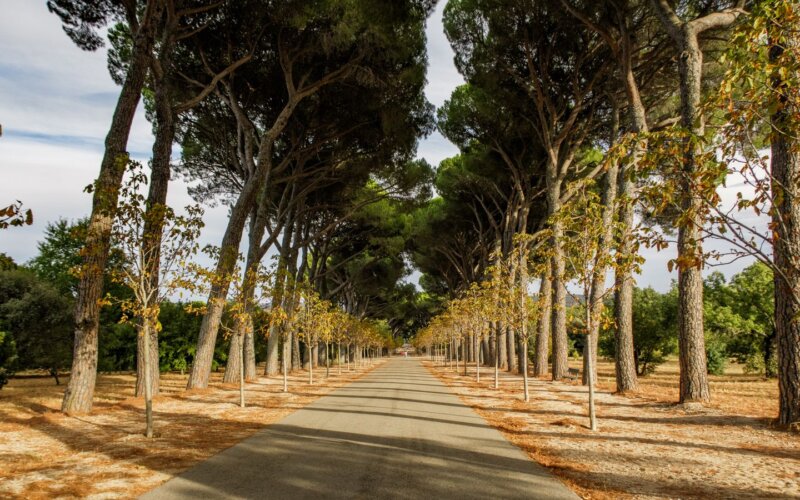
Take Metro line 10 to Lago, walk roughly fifteen minutes past the tennis courts near the lake, and look up toward the hill with the cable car pylon on it. That’s Cerro Garabitas, and the adjacent Cerro de las Canteras, Madrid’s primary outdoor cruising ground, spread across wooded hillside that makes Vondelpark look like a postage stamp by comparison.
I went on a Thursday expecting quiet and got a genuinely active scene anyway, which told me more about Madrid’s actual cruising culture than any bar could have. [PERSONAL EXPERIENCE] Weekends and summer nights run considerably busier, by every account I gathered on the ground, but the baseline activity level on an ordinary weeknight already exceeded what I’d expect from a comparable spot in most European capitals.
The crowd skews wide: younger men who clearly found the spot on an app sitting alongside older regulars who’ve been coming for years, daylight visitors mixed with the after-dark crowd that the location is actually known for. Casa de Campo itself is Madrid’s largest municipal park by a wide margin, considerably bigger than London’s Hyde Park, and the cruising area occupies only a fraction of that footprint, tucked into terrain that gives genuine cover without requiring you to wander far from a clear route back to the Metro.
Citation Capsule: Cerro Garabitas and the adjacent Cerro de las Canteras, accessed via Madrid Metro line 10 to Lago station, form the city’s primary outdoor cruising ground within Casa de Campo, Madrid’s largest municipal park. Activity peaks on weekend nights and throughout summer, with a noticeably wider age range than Chueca’s indoor venues attract.
El Retiro: The Convenient Alternative
El Retiro, Madrid’s other major park and considerably closer to the centre, runs a smaller, more casual secondary cruising scene, mainly relevant if you’re staying near the centre and don’t want to make the trip to Casa de Campo. It’s a different proposition entirely: more visible, more daytime-oriented, less of a dedicated destination and more of an opportunistic option for men already in the park for other reasons.
Marcus’s take: Don’t build a trip around El Retiro. Build it around Casa de Campo and treat El Retiro as what it actually is, a fallback for an afternoon when the hill isn’t where you’re headed.
Madrid vs. Amsterdam: The Comparison I Couldn’t Avoid Making
I cover Amsterdam’s cruising scene for this site, so I wasn’t going to pretend I could write about Madrid without the comparison sitting in the back of my head the entire trip. Amsterdam has a 2008 municipal policy that names De Oeverlanden as a tolerated zone, built with input from public health researchers and the country’s oldest LGBTQ+ rights organisation. Madrid has none of that paperwork. Casa de Campo’s tolerance is pure accumulated custom, never formalised, which makes the whole scene feel a degree looser and a degree less guaranteed at once.
What Madrid has that Amsterdam doesn’t is scale and noise. Chueca is louder, younger, and considerably less self-conscious about its own tourist appeal than Warmoesstraat’s careful subcultural gatekeeping. Casa de Campo, once you’re actually on the hill, has a directness to it that fifty years of formalisation in Amsterdam has, in its own way, slightly softened. Neither approach is the better one. They’re just different answers to the same underlying question: how much does a city write down versus simply allow.
Frequently Asked Questions
Where do gay men cruise in Madrid?
Three distinct zones, and they don’t overlap much. Chueca is the indoor scene: Shower Bar and Boyberry run dedicated dark rooms inside the neighbourhood’s dense bar grid, while Attack and The Ring, the latter technically in nearby Lavapies, run as private cruise clubs with cover charges and stricter door policies. Casa de Campo is the outdoor scene, concentrated around Cerro Garabitas and Cerro de las Canteras near the cable car pylon, reachable by Metro line 10 to Lago and a fifteen-minute walk. El Retiro functions as a smaller, more casual secondary outdoor option closer to the centre, popular with men who don’t want to make the trip west. Each zone has its own crowd and its own unwritten rules, and conflating them, treating Chueca bar etiquette as if it applies at Casa de Campo, is the fastest way to misread the scene entirely.
Is Casa de Campo safe for cruising?
Reasonably, with the standard outdoor cruising caveats applying in full. Casa de Campo is Madrid’s largest municipal park, considerably bigger than most visitors expect, and the cruising area around Cerro Garabitas operates on its own schedule: busiest on weekend nights and summer evenings, far quieter midweek and in winter. The park itself is well used by joggers, cyclists, and families during the day, which keeps general visibility high, but the wooded hill sections after dark are a different environment entirely: low lighting, uneven terrain, and the kind of isolation that always demands basic awareness regardless of city. Bring minimal valuables, know roughly which path gets you back to the Metro, and don’t wander deep into unfamiliar terrain alone on your first visit. The scene there has run for decades without acquiring a dangerous reputation, but decades-long tolerance is not the same as zero risk.
What’s the difference between Chueca’s bars and its cruise clubs?
Bars like Hot and Zarpa on Calle Infantas are social spaces first: drinking, cruising with your eyes, a bear and leather-adjacent crowd, and zero expectation that anything physical happens on site. Shower Bar and Boyberry are a different category entirely, dark rooms built into the venue as a primary feature rather than an afterthought, with Boyberry running an attached sex shop and a small cabin maze behind a token cover charge. Attack and The Ring go further still: private membership-style cruise clubs with wet areas, slings, and cages, closer in spirit to Amsterdam’s Warmoesstraat strip than to a standard gay bar. A visitor who only hits the bars sees Chueca’s social layer. A visitor who only hits the clubs sees its cruising infrastructure. The neighbourhood only makes sense once you’ve done both, ideally in that order.
Is gay cruising legal in Madrid?
There’s no clean national criminal law answer, which surprises most visitors. Spain repealed its general public indecency offence years ago, and Article 185 of the Codigo Penal, the provision people sometimes cite, actually addresses exhibition before minors specifically and has nothing to do with consenting adults at Casa de Campo. What actually governs outdoor cruising in Madrid is municipal: local ordenanzas de convivencia ciudadana, civic ordinances that carry administrative fines rather than criminal charges, and enforcement intensity has shifted depending on the city government in office at the time. Indoor venues, Shower Bar, Attack, The Ring, operate as private commercial premises with no ambiguity whatsoever. The full country-by-country breakdown, including how Spain compares to its neighbours, is in Is Gay Cruising Legal in Europe.
How does Madrid’s cruising scene compare to Amsterdam’s?
Less codified, more improvised, and noticeably less written about, which is most of why I went. Amsterdam has a 2008 municipal policy formally designating De Oeverlanden as a tolerated cruising zone, built with input from public health researchers and the country’s oldest LGBTQ+ rights organisation. Madrid has nothing equivalent on paper. Casa de Campo’s tolerance is purely a function of accumulated custom and police discretion, never written down anywhere. The two cities also feel different on the ground: Amsterdam’s scene carries the weight of fifty years of leather-bar continuity on Warmoesstraat, while Madrid’s energy is younger, louder, and considerably less self-conscious about being a tourist destination. Neither is better. They’re answers to different questions about what a city is willing to formalise versus simply allow.
Madrid never asked anyone’s permission to be what it is. Nobody wrote it a policy, nobody designated the hill, and the scene kept running anyway, on custom and word of mouth and now, increasingly, on a dot on a map. That unwritten quality is the whole character of the place. Go find the hill yourself.