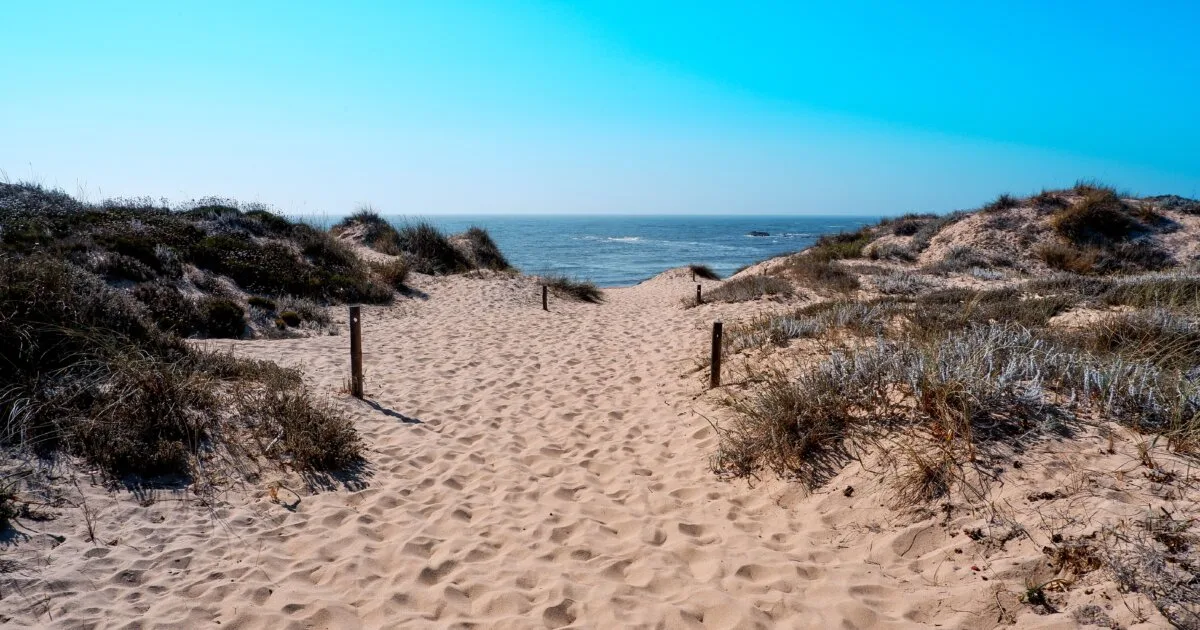
The ferry from Cais do Sodré takes twelve minutes to cross the Tagus. From Cacilhas, a bus runs south along the peninsula. Then a little train trundles along the beach, stopping at each numbered section like a city bus that’s decided sand is a reasonable surface. You get off at 19.
This is Praia 19, the gay beach in Lisbon, or as close to one as the Atlantic coast gets. The Portuguese name is the one you’ll hear on the sand. There’s no official designation. No sign. No rainbow flag staked into the dunes. Just a crowd that knows, and has known for years, that this is where to be.
What Actually Makes Praia 19 the Gay Beach
Costa da Caparica is a stretch of Atlantic coastline that runs roughly 30km south of Lisbon. The beaches are numbered from north to south, from 1 (the town, busy, family-oriented) to the higher numbers (progressively quieter, more local, less tourist infrastructure). Beach 17 is the nudist beach. Beach 19 is where the gay crowd has settled, by the kind of collective agreement that doesn’t require a committee.
The bar at Beach 19 is the anchor. It runs from late morning through sunset, plays music at a volume that suggests it knows its audience, and doesn’t need to be gay-branded to be obviously queer-friendly. The crowd arrives late by Portuguese standards: noon at the earliest, properly full from 2pm. They stay until the sun goes and then continue in Lisbon. This is not a day at the beach in the German sense. It’s a social occasion that happens to take place on sand.
For the full picture of Lisbon, Beach 19 is the afternoon component. The morning is the city. The night is Bairro Alto. The beach is the part in between that makes the trip feel like a life rather than an itinerary.
The cities worth going to. The spots worth finding. In your inbox.
Every week. No noise.
No spam. Unsubscribe anytime.
By subscribing you agree to our Privacy Policy.
How to Actually Get There
The journey from Lisbon to Beach 19 takes around 60 to 75 minutes each way. This is not a short trip. It’s also not a complicated one, and it’s cheap: the ferry costs around €1.45 each way, the bus adds a few euros more. For transport and city planning resources, Visit Lisboa has the practical detail. For other beaches along the Lisbon coast, Time Out Lisbon’s beach guide covers the alternatives.
The route: ferry from Cais do Sodré to Cacilhas (12 minutes, runs frequently), then the 153 or 161 bus from outside the ferry terminal to Costa da Caparica town (around 30 to 40 minutes depending on traffic). From the town, the Transpraia mini-train runs along the beach stopping at each numbered section. Get off at 19. The train runs from late June through September only.
If the Transpraia isn’t running (which can happen outside peak season or due to maintenance), you can walk along the beach from the town, though Beach 19 is far enough that this takes thirty minutes on sand. A taxi from Costa da Caparica town is the alternative.
Going by Uber or taxi from Lisbon directly costs around €20 to €30 each way but adds bridge and tunnel time. The ferry route is slower overall but more interesting and significantly cheaper. It also deposits you at Cais do Sodré, which is useful if you’re heading directly to the bars in Santos after the beach.
What to Bring and What to Expect
The Atlantic at Costa da Caparica is cold and fast. The Portuguese use the flag system seriously: green flag means safe conditions, yellow means swim with caution, red means the sea is not for swimming that day. The waves look manageable from the dunes and are not always manageable in the water. Respect the flags. Bodysurfing when conditions allow is excellent. Getting caught in a rip when conditions don’t is not.
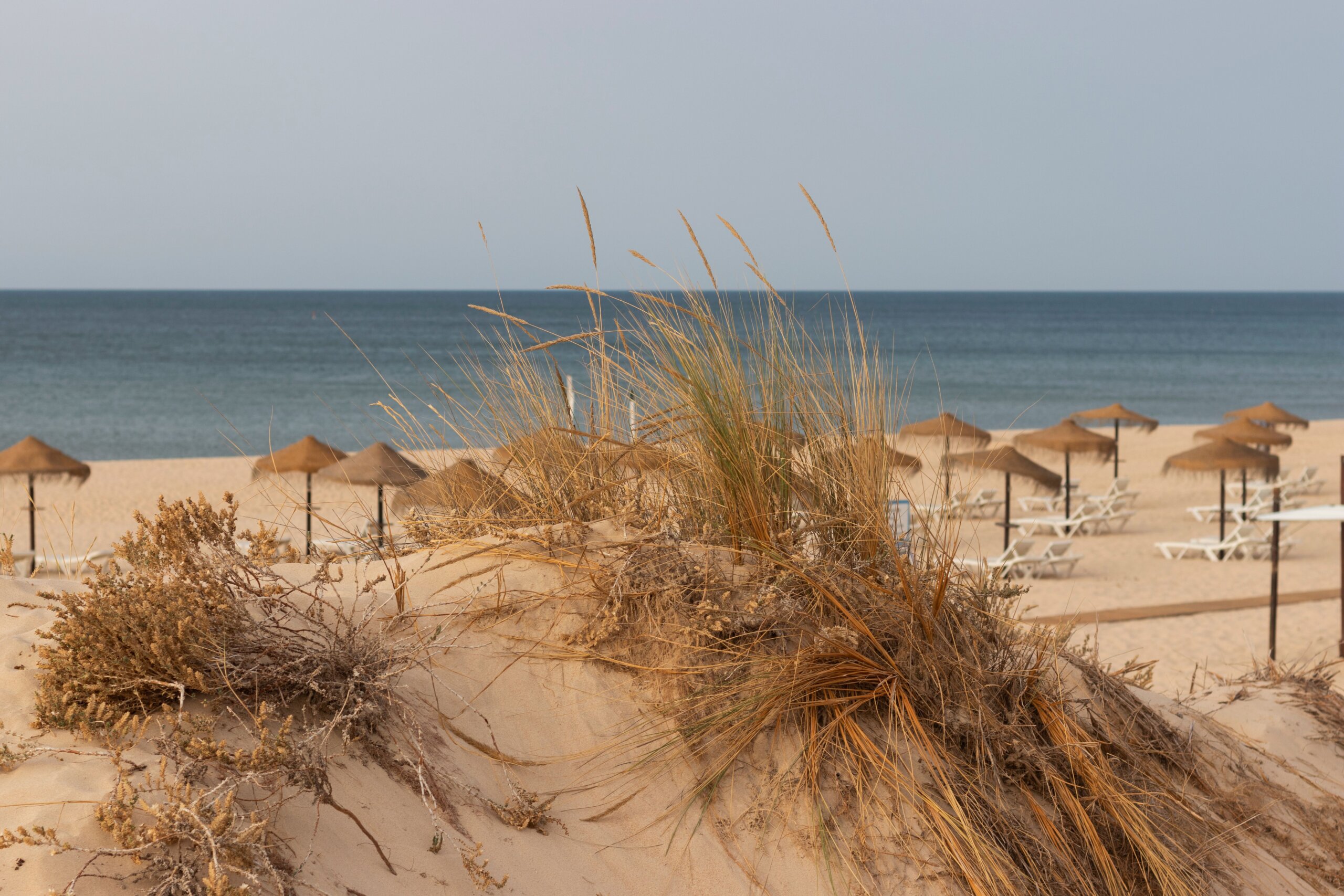
The beach itself is wide, backed by dunes, and less crowded the further from the town you go. There are natural wind breaks if you find a dune hollow, which you’ll want in the afternoon when the Atlantic breeze picks up. Sunscreen is a genuine requirement: the Portuguese sun in summer is more intense than the pleasant temperature suggests.
The bar sells drinks, snacks, and simple food. It’s not a restaurant. Arriving with supplies (water, food, something cold) is sensible. Parasols and sun loungers can be rented at various points along the beach if you want to commit to the afternoon properly.
When to Go
June through September is the season. The mini-train doesn’t run outside that window and the bar at Beach 19 operates seasonally. July and August are the busiest months. The crowd is larger, the energy is higher, and getting a spot that isn’t directly adjacent to strangers requires arriving before 1pm.
Late June (immediately after Lisbon Pride) is a particularly good time. The city has just been full of queer energy, the beach crowd reflects that, and the temperature has reached the point where the Atlantic is refreshing rather than punishing. It’s also slightly less crowded than the peak of July.
September cools down and the crowds thin, but the water is warmest then (the sea takes time to heat). The beach still runs, the bar is still open, the crowd is still there, just smaller and more local. If you’re coming specifically for Bear Pride Lisbon in September, the beach in that period has its own particular texture.
If You Want a Different Beach Entirely
Not everyone wants to make a 75-minute journey for a beach that is gay by reputation rather than designation. Lisbon also has Sesimbra, on the other side of the peninsula: calmer water, dramatic limestone cliffs, a fishing village that still functions as one. It’s not a gay beach. It’s a beautiful beach. Sometimes that’s what the trip needs instead.
Beach 19 is the choice when you want to be around your own people in the sun. Sesimbra is the choice when you want to be somewhere extraordinary and slightly off the map. Lisbon offers both within an hour and a half of the city centre, which is not nothing.
Frequently Asked Questions: Gay Beach in Lisbon
Beach 19 at Costa da Caparica, on the Atlantic coast south of Lisbon. It’s not officially designated but is consistently the queer-friendly section of the beach, with a bar that runs a gay-leaning crowd from June through September.
Take the ferry from Cais do Sodré to Cacilhas (12 minutes), then the bus from Cacilhas to Costa da Caparica. From there, a mini-train runs along the beach to each numbered section. Journey total: around 60 to 75 minutes each way.
No, Beach 19 is not officially a nudist beach. The nudist section at Costa da Caparica is Beach 17. However Beach 19 is consistently recognised as the gay-friendly stretch and the crowd there reflects that.
Yes, the water is clean and monitored, but the Atlantic current can be strong. Pay attention to the flag system: green means safe, yellow means caution, red means stay out. The waves are bigger than they look from the dunes.
June through September for warm weather and the full beach bar scene. July and August are peak season. June post-Pride is a sweet spot: warm, busy enough to feel alive, not so crowded that you’re laying on top of someone you didn’t choose to.