Lisbon gay neighbourhoods used to be a two-word answer: Príncipe Real. Ask again in 2026 and the honest reply takes a map. The established scene still holds its two hills, but a newer queer axis has grown along the river and up the city’s eastern side. Most guides haven’t caught up.
This is the map, then. What each area actually is, who it suits, and how they connect on foot. For the full city guide, our complete gay Lisbon travel guide goes deeper on everything below.
How Lisbon’s Gay Neighbourhoods Fit Together
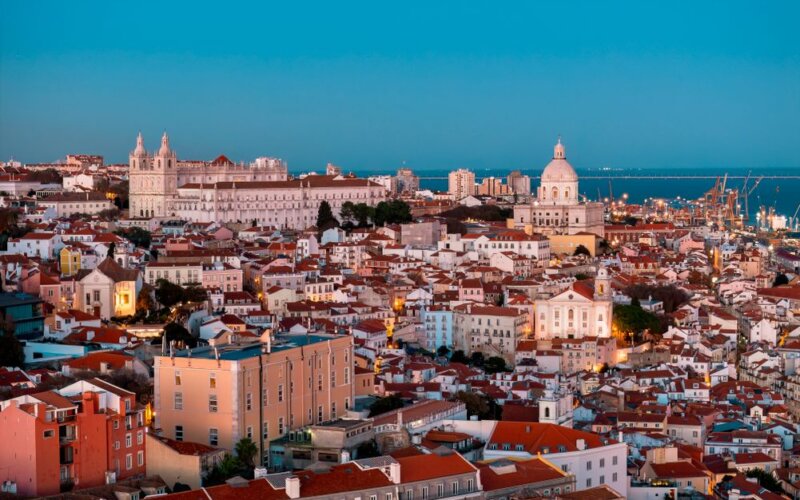
The geography is compact and mostly vertical. Príncipe Real sits at the top of the hill, polished and established. Bairro Alto runs downhill from it, and the two share one walkable slope of maybe ten minutes. Below them, Santos and Cais do Sodré hold the riverfront. Then, across the centre to the east, Intendente and Arroios climb along Avenida Almirante Reis.
So the shape is simple: two hills, one riverbank, one eastern axis. Everything in this piece sits within a metro ride or a stubborn walk of everything else. That compactness is half of Lisbon’s charm and most of its logic.
Príncipe Real: The Established Address
Príncipe Real is where Lisbon’s gay identity lives most visibly at street level. The tree-lined square fills on weekend afternoons, the city’s longest-running gay bars sit within a few blocks, and Rua de São Marçal remains the closest thing Portugal has to an institutional gay street.
The cities worth going to. The spots worth finding. In your inbox.
Every week. No noise.
No spam. Unsubscribe anytime.
By subscribing you agree to our Privacy Policy.
It is also the most polished and the most expensive of the areas here. If it sounds like your speed, we wrote a full Príncipe Real deep dive covering the bars, the Sunday market and the addresses that matter. For this map, the summary is enough: established, central, and still the default answer for a first visit.
Bairro Alto: The Night Slope
Bairro Alto is what happens when Príncipe Real walks downhill and loosens up. By day it is quiet, almost hungover. From midnight it becomes the city’s densest nightlife grid, and Rua da Barroca is its gay block, bars spilling onto warm cobblestones until far too late.
The area works as an evening, not a base. Sleep is scarce here and the incline is real. Our Lisbon gay bars guide covers the individual rooms, because this piece is about the streets rather than what’s poured on them.
Santos and Cais do Sodré: The River Generation
Below the hills, Lisbon’s gay neighbourhoods have stretched toward the water. Travel press caught it in 2025: Pink Ticket Travel describes a new wave of younger LGBTQ-friendly venues in Santos, in the residential streets rising above the river. Cais do Sodré next door contributes the late-night gravity, mixed rather than specifically gay, but queer-comfortable in a way that would have surprised anyone who knew its harder past.
For a certain traveller this is the sweet spot. You get river light, newer rooms, and a shorter stumble home than either hill offers. It is a scene still forming, which is exactly its appeal.
Intendente, Arroios and the Eastern Turn
The most interesting story in Lisbon gay neighbourhoods right now runs east, along Avenida Almirante Reis. Intendente, once a district visitors were warned off, now hosts queer collectives and genderless bars alongside its older working identity. Arroios, just uphill, has become the part of town where queer Lisbon increasingly lives rather than just goes out.
The economics explain it. As far back as 2022, idealista reported that lower prices, new LGBTI-friendly businesses and good transport were pulling the community toward Intendente, Bairro das Colónias and even Penha de França. Four years on, that migration reads less like a trend and more like the map redrawing itself.
Expect a different register here. This is the raw, present-tense version of queer Lisbon: less commercial, more collective, occasionally scruffy and better for it. Nobody hands you a scene. You find it, which some of us consider the entire point.
Which Area Should You Base In
Across Lisbon’s gay neighbourhoods, the short version goes like this. Príncipe Real for a first visit, Santos for river light and newer energy, Arroios for a longer stay that feels like living here. Bairro Alto is where your nights end, not where your luggage lives. And because the whole map is compact, no choice locks you out of the others.
For the booking side of that decision, our gay hotels in Lisbon guide breaks down where to stay neighbourhood by neighbourhood. This map tells you where the scene is. That one tells you where to sleep near it.
Frequently Asked Questions
What is the main gay neighbourhood in Lisbon?
Príncipe Real is the established heart of gay Lisbon, with the city’s longest-running gay bars and its most visible street-level queer identity. Bairro Alto, directly downhill, is the nightlife extension of the same scene. Together they form the traditional core, though Santos, Intendente and Arroios now carry a growing share of the city’s queer life, especially its younger and more alternative side.
Príncipe Real or Bairro Alto: which should I choose?
Choose Príncipe Real to be based in the scene: it is calmer, more polished and better for sleeping. Choose Bairro Alto only for the nights themselves, since Rua da Barroca and its surrounding blocks run loud past 2am. In practice the two sit ten minutes apart on one slope, so most visitors stay in or near Príncipe Real and walk downhill when the evening starts.
What is the up-and-coming gay area in Lisbon?
The eastern axis of Intendente and Arroios, along Avenida Almirante Reis. Queer collectives and genderless bars have settled there, and reporting since 2022 shows the community moving in for lower rents and good transport. Santos, above the river, is the other growth story, with a newer generation of LGBTQ-friendly venues. Both feel more present-tense than the polished core.
Are Lisbon’s gay neighbourhoods walkable between each other?
Mostly yes, with hills as the tax. Príncipe Real to Bairro Alto is a ten-minute downhill walk, and Santos sits below them near the river. The eastern areas of Intendente and Arroios are the exception: cross town by metro, as the Green line links them to the centre in minutes. Nothing on this map is more than a short ride from anything else.
Where is the gay nightlife in Lisbon?
Of the Lisbon gay neighbourhoods, Bairro Alto holds the densest nightlife, centred on Rua da Barroca, with the historic clubs nearby. Príncipe Real contributes the established bars uphill. Cais do Sodré and Santos add late, mixed, queer-comfortable rooms by the river, while Intendente hosts the alternative and collective-run end of the spectrum. Our nightlife guide covers the venues one by one.